





Description
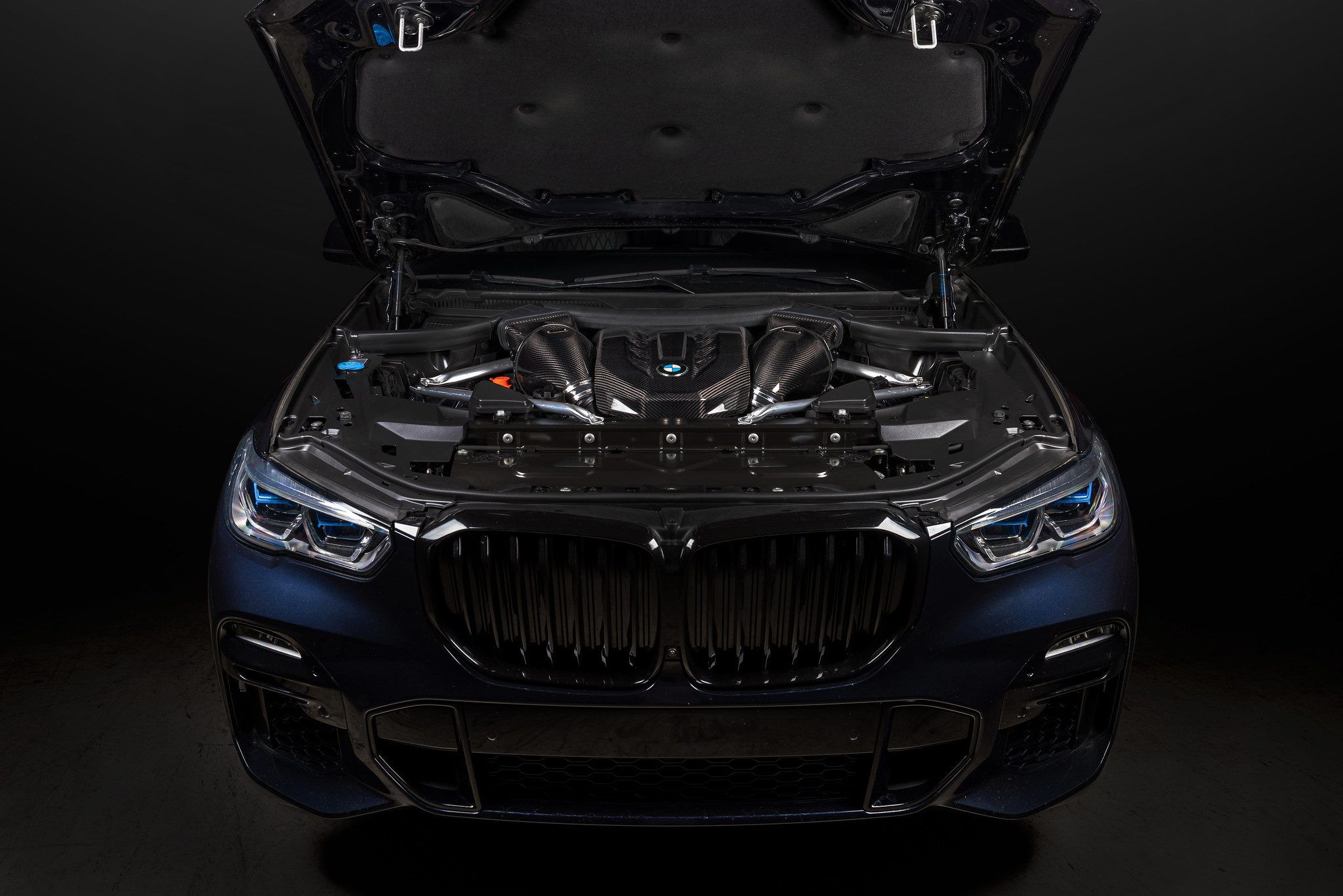
Eventuri BMW X5 M50i G05 / X6 M50i G06 / X7 M50i G07
Eventuri Carbon Intake System : Verified Vehicle Compatibility
Chassis / Engine
- BMW X5 M50i – G05 (2018+)
- BMW X6 M50i – G06 (2019+)
- Engine: BMW N63TU3
- 4.4 L V8
- Twin-turbocharged
- Hot-V turbo configuration
This intake is specific to the N63TU3 layout and is not interchangeable with S63 (X5M/X6M) or S68 (M60i) systems.
OEM Intake System Limitations (N63TU3 Context)
From an engineering standpoint, the stock BMW intake on the N63TU3 presents the following constraints:
- Multiple abrupt directional changes before compressor inlet
- Limited airbox volume, constrained by engine bay packaging
- Shared intake tract geometry optimized for NVH and emissions, not pressure drop
- Thermal exposure from proximity to turbochargers and exhaust manifolds (Hot-V layout)
These factors increase:
- Pressure loss before the compressor
- Compressor work for a given boost target
- Intake air temperature under sustained load
Eventuri Engineering Objectives (N63TU3)
The Eventuri system is designed to address those constraints by:
- Reducing pressure drop between ambient air and turbo inlet
- Increasing mass airflow capacity beyond OEM limits
- Stabilizing airflow velocity profile at the compressor inlet
- Limiting heat soak via material choice and sealed routing
- Maintaining OEM sensor compatibility (no ECU recalibration required)
Measured Flow & Performance Data
(Based on distributor and test bench data for N63 applications)
Airflow Capacity
- OEM intake: ~720–750 CFM (combined)
- Eventuri intake: ~850–880 CFM (combined)
- Net increase: ≈ +15–18% airflow capacity
Observed Performance Gains (Stock ECU)
- Peak power: +15 to +25 hp
- Peak torque: +15–20 ft-lb
- Improved transient response (faster turbo spool, especially mid-range)
Gains are primarily attributable to lower inlet restriction and improved compressor efficiency, not acoustic effects or ECU adaptation tricks.
Component Breakdown
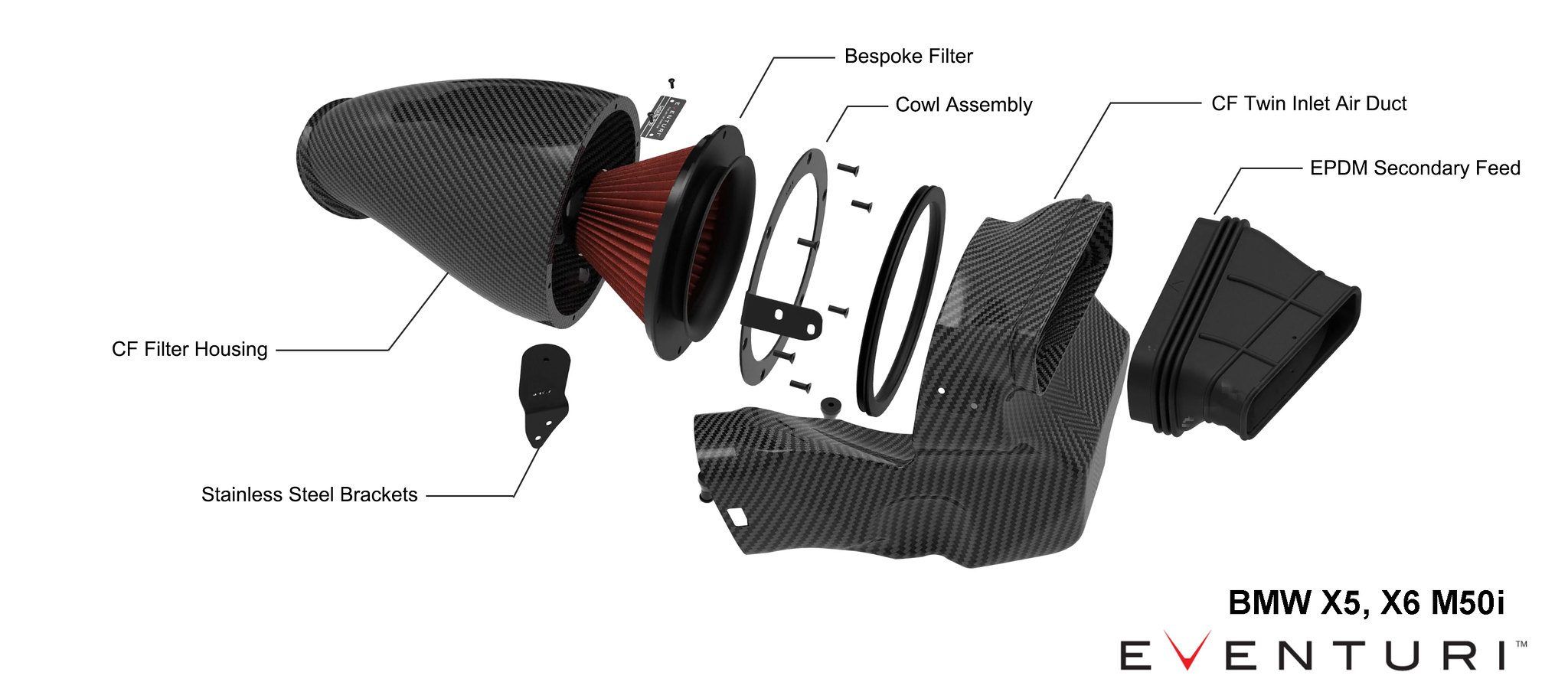
| Component | Technical Function |
|---|---|
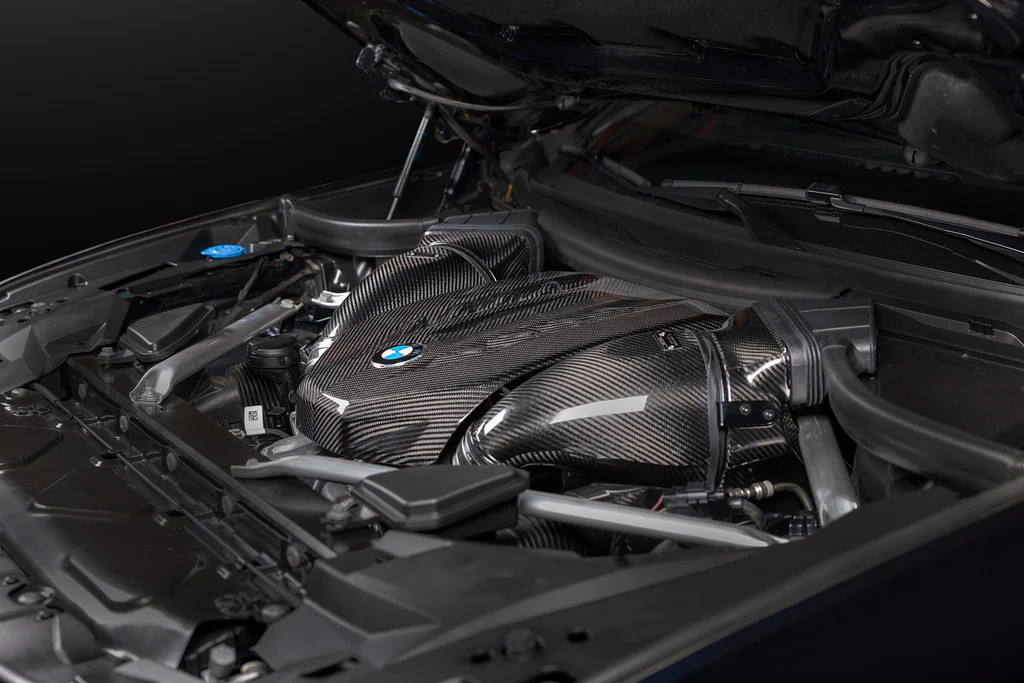
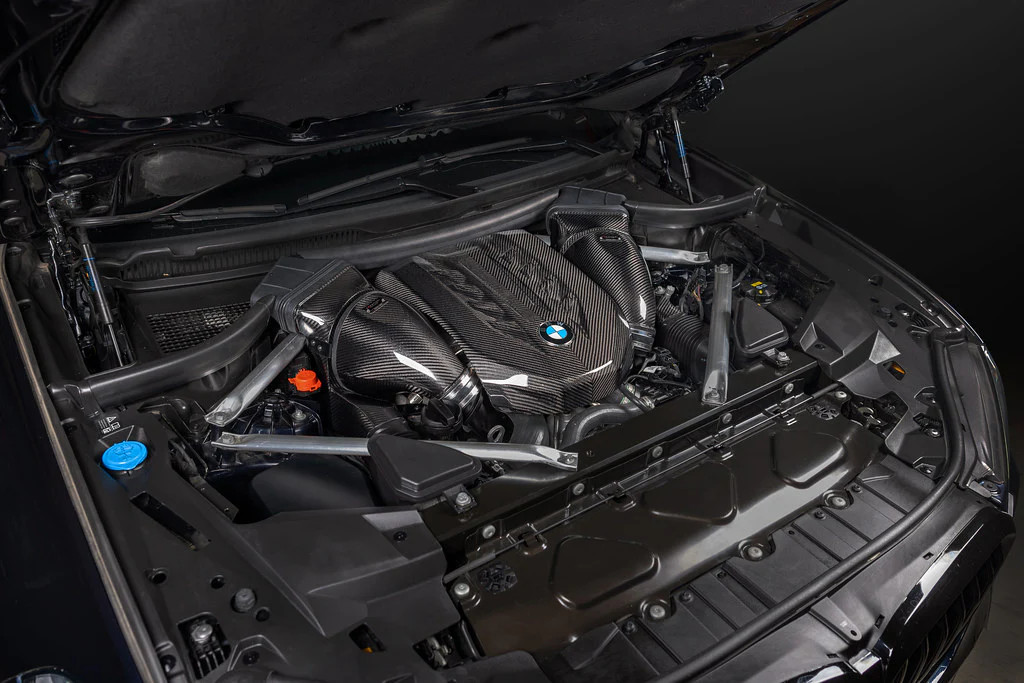
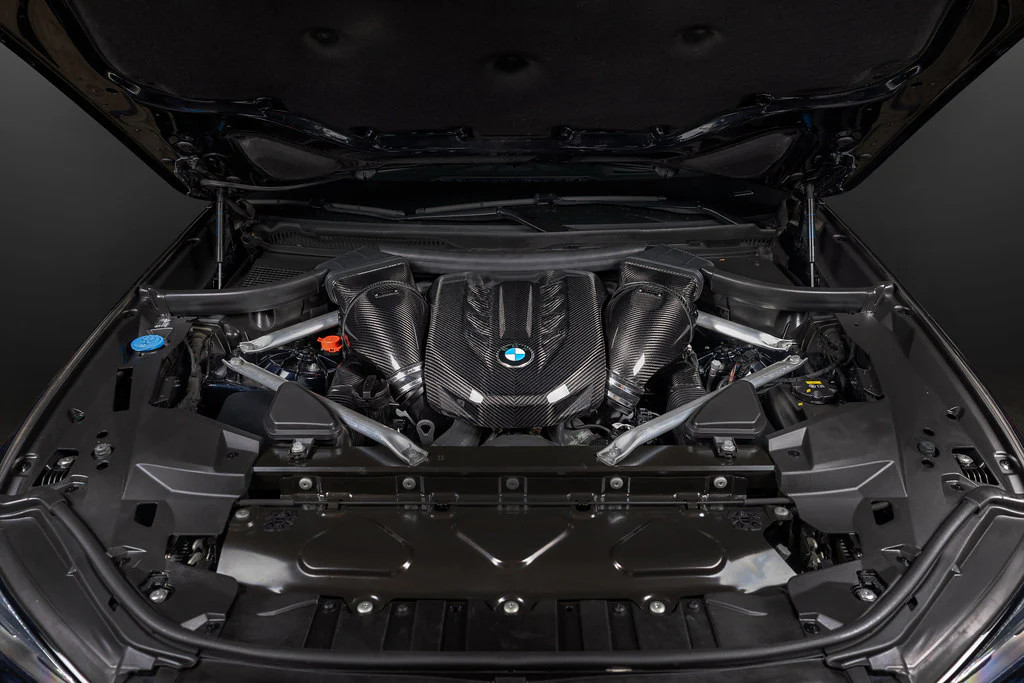
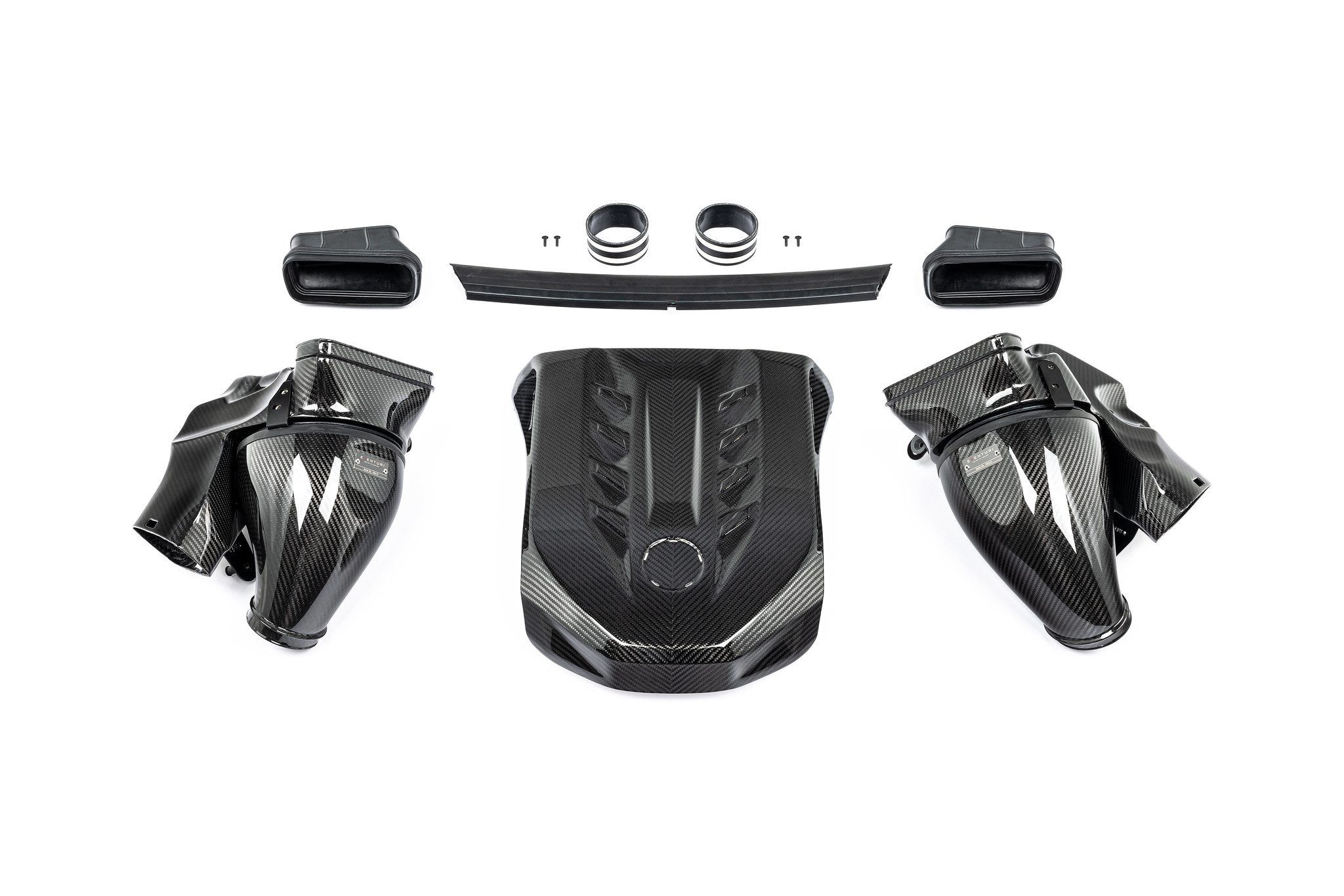
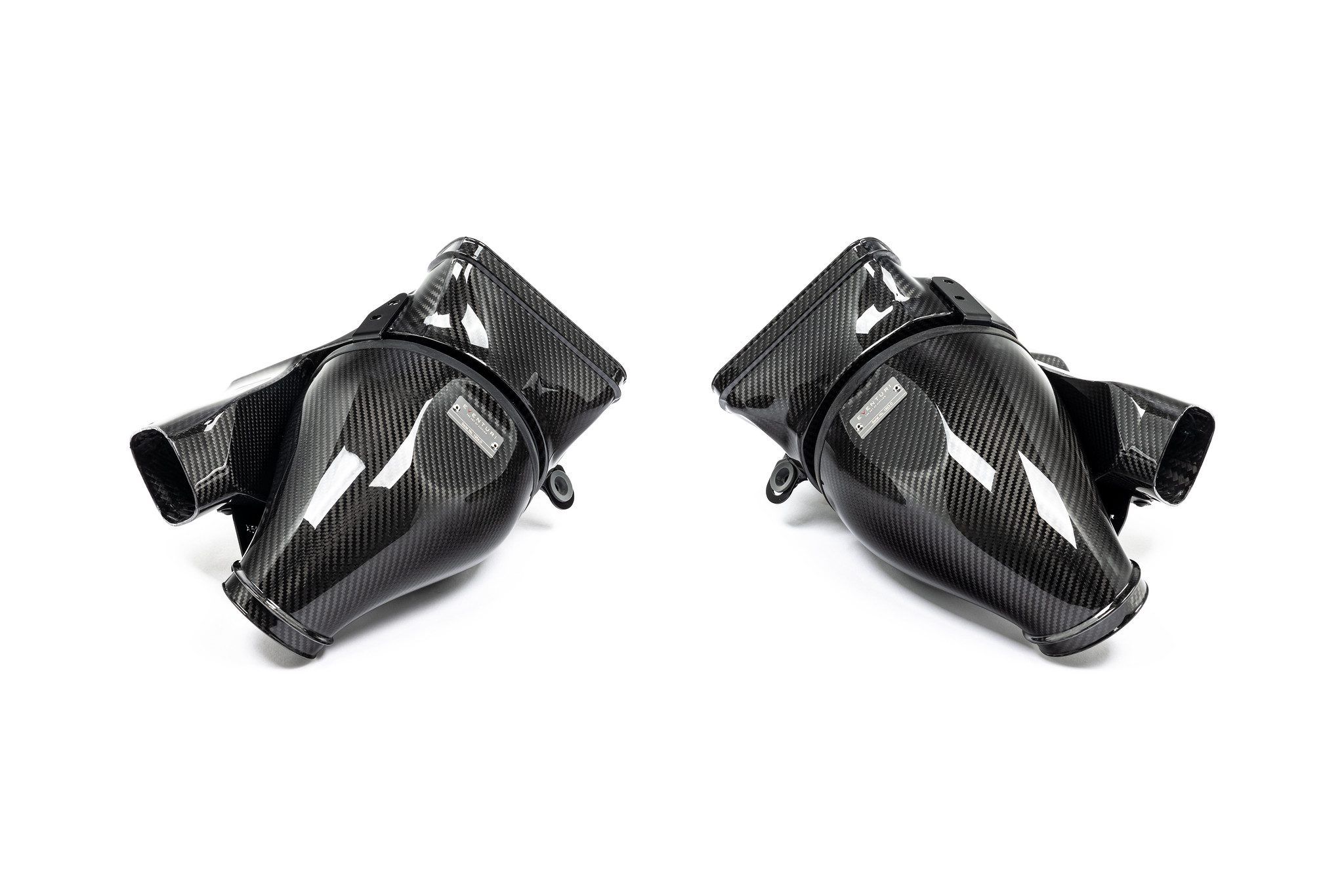
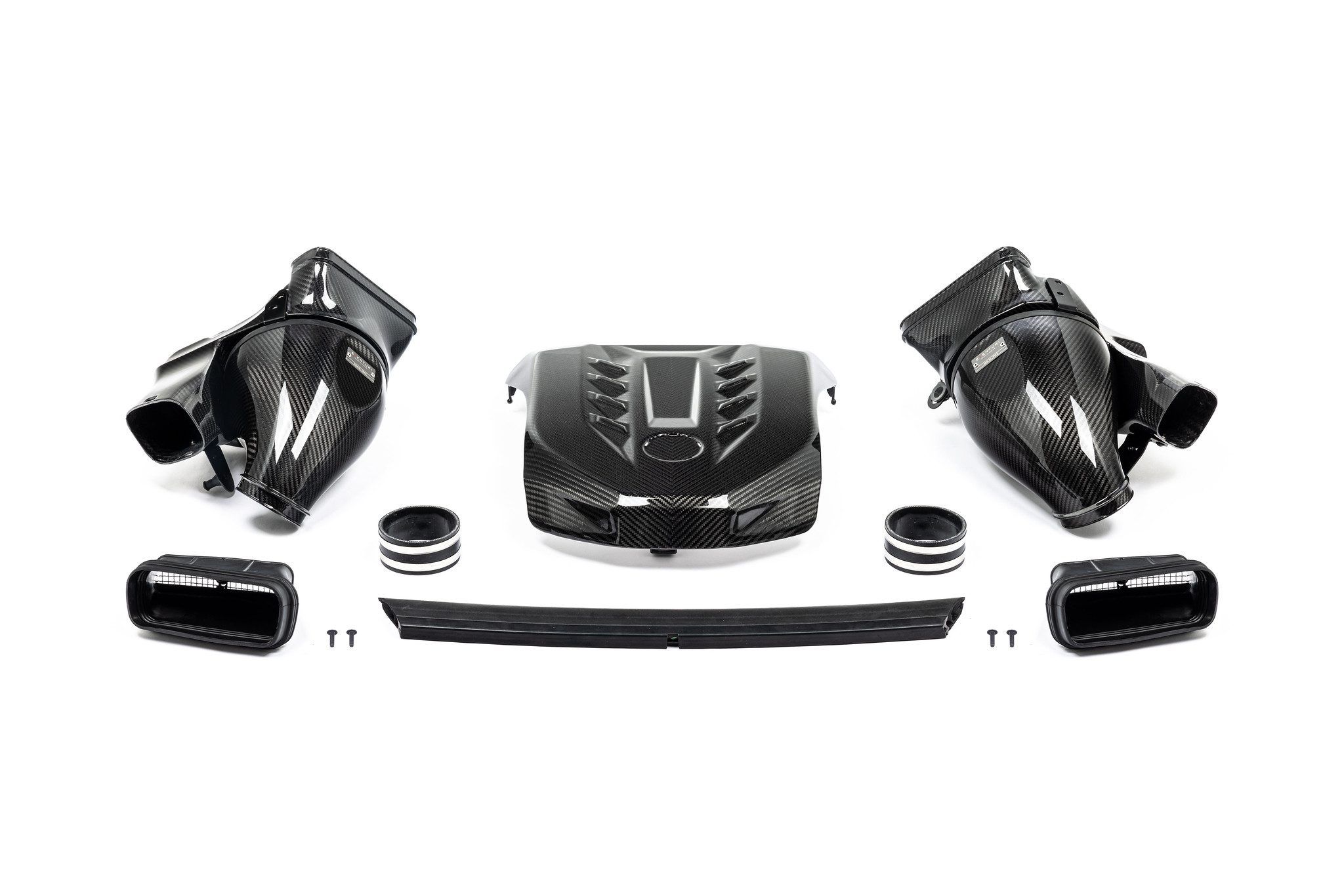
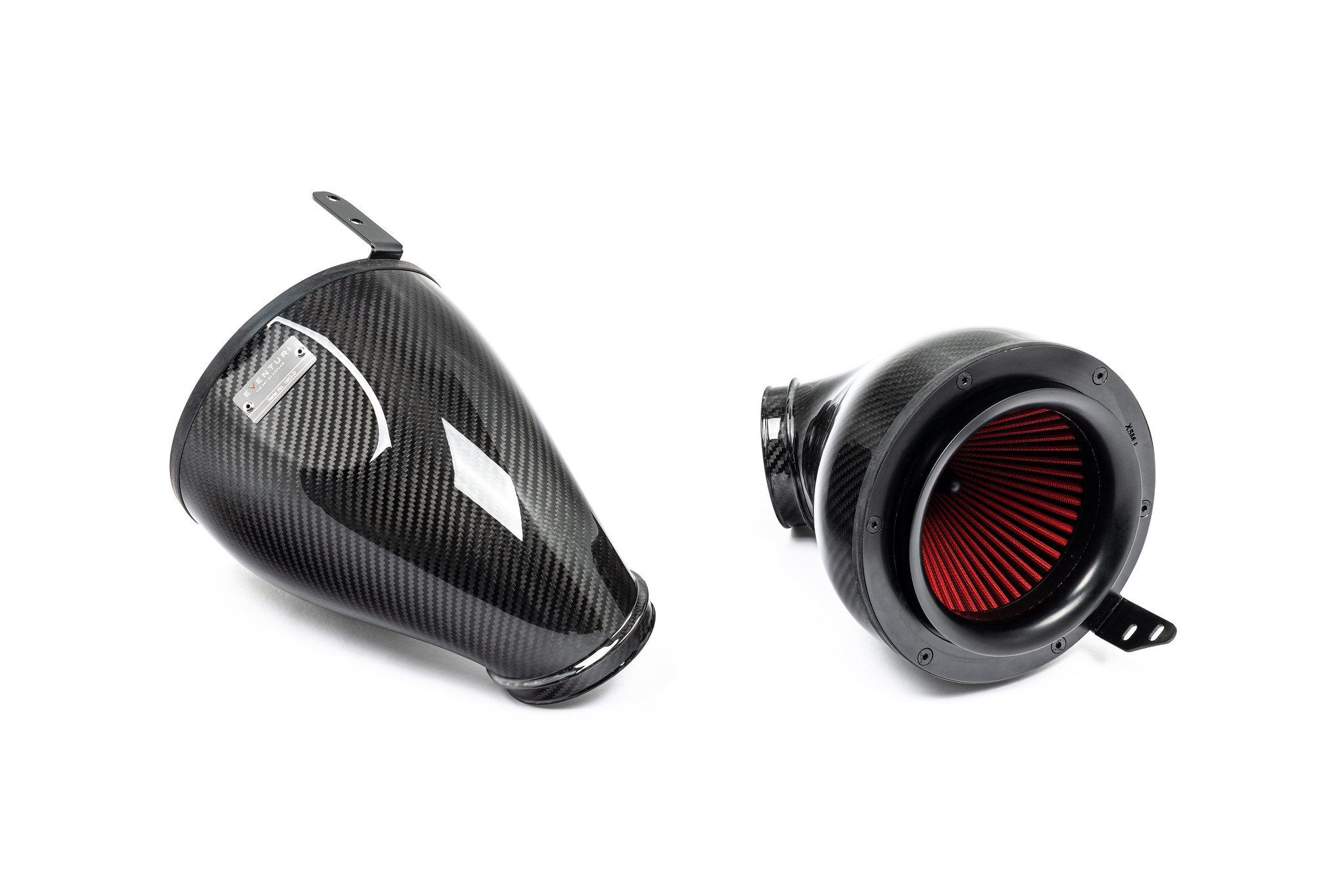
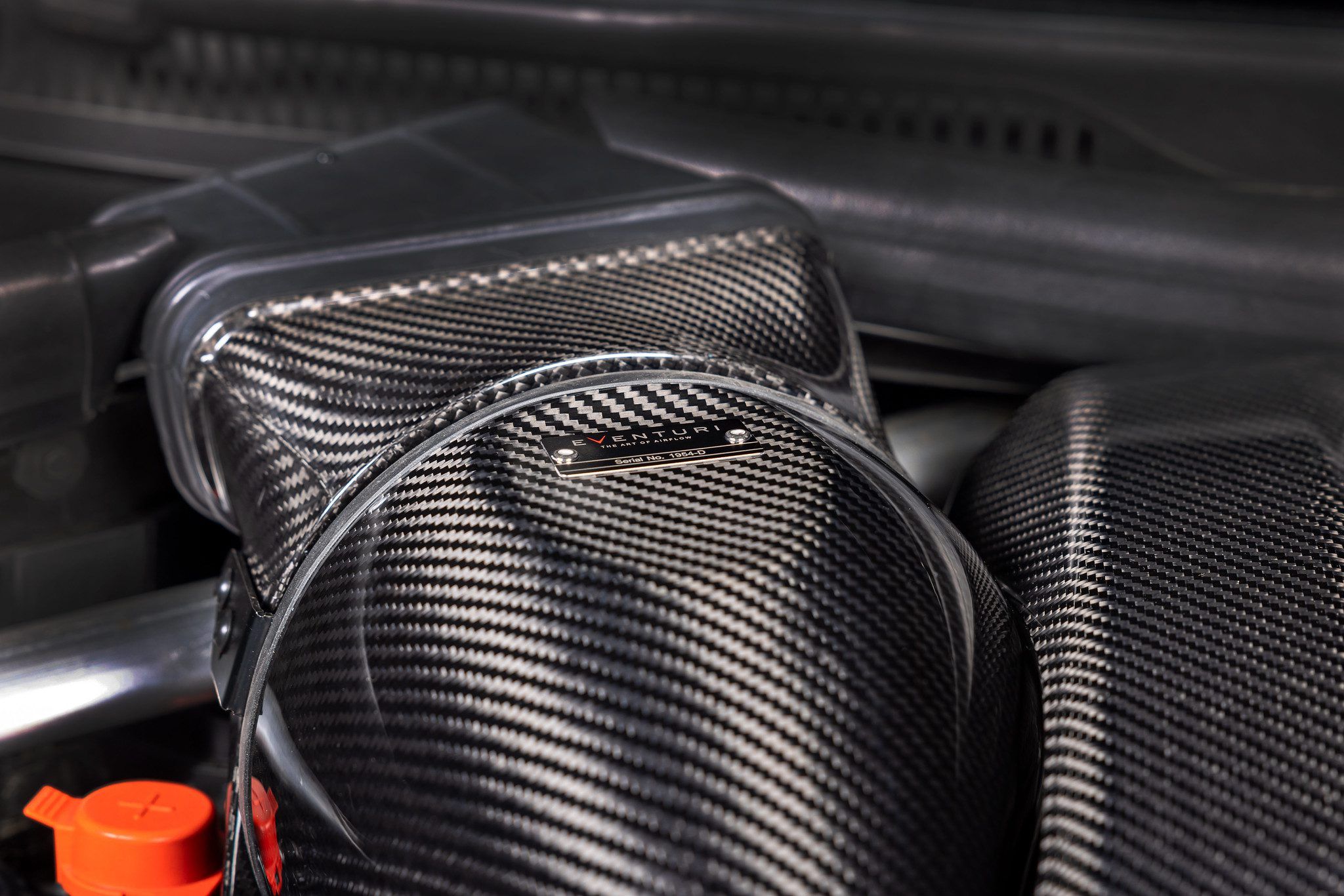
| Carbon Venturi Filter Housings ×2 | Integrated filter/velocity stack units using controlled taper geometry to minimize boundary-layer separation and turbulence at the inlet |
| Dry High-Flow Cone Filters ×2 | Non-oiled filtration media to ensure stable flow characteristics and avoid MAF contamination |
| Prepreg Carbon Intake Ducts ×2 | Direct air routing from frontal intake area to turbo inlets with reduced tortuosity |
| Carbon Airbox Shrouds / Heat Shields | Physical separation from engine bay heat sources, limiting convective heat transfer |
| Silicone Couplers | High-temperature, pressure-stable interfaces at turbo inlet connections |
| CNC-Machined Mounting Hardware | Maintains alignment and vibration control under engine movement |
| OEM-Compatible Sensor Mounts | Retains factory MAF and temperature sensor placement and calibration logic |
Material and Construction Details
- Carbon type: Pre-preg carbon fiber
- Resin system: Autoclave-cured, high-temperature epoxy
- Internal surface finish: Smooth, low-roughness laminate to reduce friction losses
- Dimensional stability: Maintained under repeated thermal cycles typical of N63 Hot-V engines
Carbon is used here for structural and thermal reasons, not cosmetic ones:
- Lower heat absorption vs plastic
- Higher rigidity under suction load
- Consistent internal geometry at elevated temperatures
Airflow Architecture (OEM vs Eventuri)
OEM Intake
- Long intake path
- Tight bends
- Sudden cross-section changes
- Airbox optimized for noise attenuation
Eventuri Intake
- Shorter, straighter intake path
- Gradual cross-section transitions
- Venturi-based inlet geometry
- Higher effective inlet area at compressor face
Result:
- Reduced pressure loss
- More uniform velocity distribution at compressor wheel
- Improved compressor operating efficiency
Installation & Integration Notes
- Direct bolt-on (no cutting, no ECU changes)
- OEM airbox removed entirely
- Retains factory sensors and diagnostics
- No calibration drift observed under normal operating conditions
- Service interval: Filters cleanable; no oiling required
Installation time (experienced workshop): ~1.5–2.0 hours
Engineering Summary (Hard Facts)
- Engine: N63TU3 V8 twin-turbo
- Airflow increase: ~+15–18% vs OEM
- Measured gains: ~+15–25 hp / +15–20 ft-lb
- Primary benefit: Reduced inlet restriction and improved turbo efficiency
- Secondary effects: Lower IAT under load, improved throttle response
- No ECU tuning required

Avis
Il n’y a encore aucun avis