

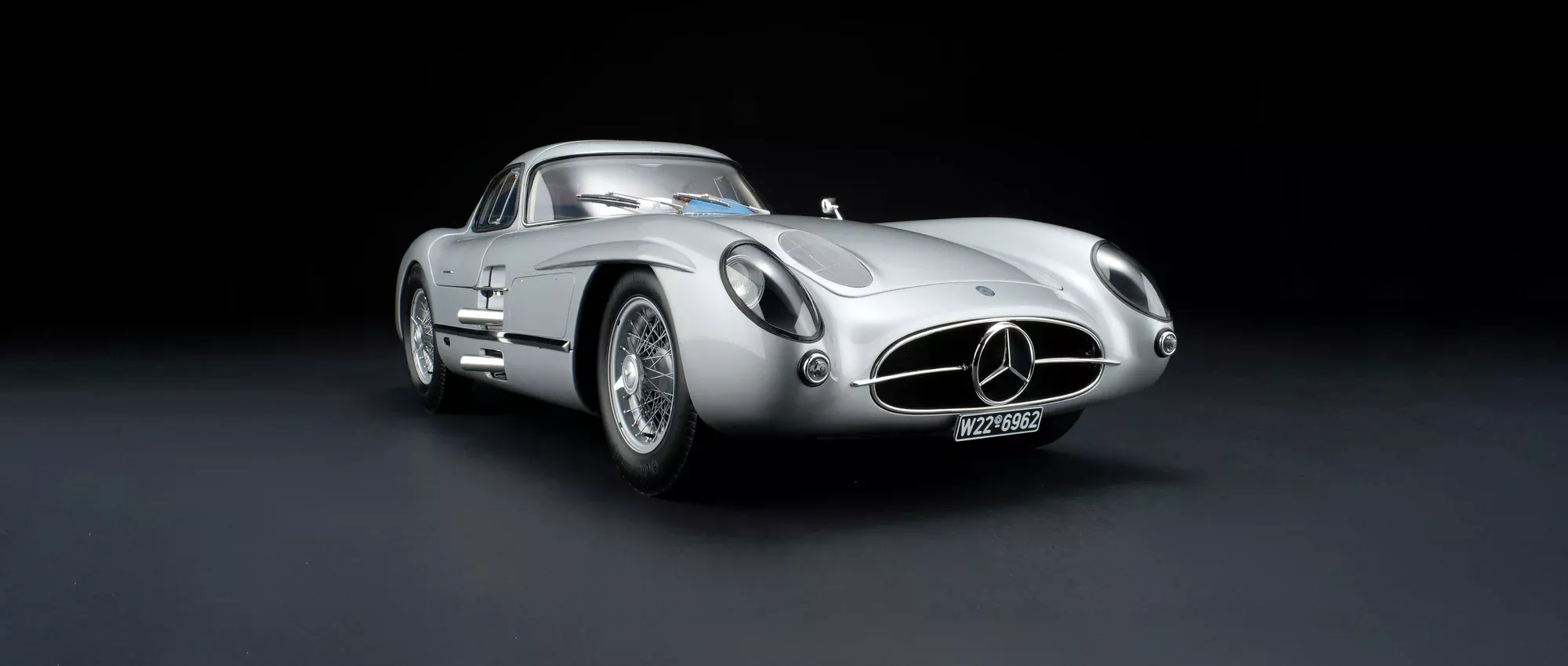
AMALGAM COLLECTION MERCEDES-BENZ 300 SLR UHLENHAUT COUPÉ (1:8)
- AMALGAM COLLECTION MERCEDES-BENZ 300 SLR UHLENHAUT COUPÉ (1:8)
- SECTION A: CONFORMITY ASSET REGISTER
- 1. Provenance and Chain of Custody Traceability
- 2. Geometric Integrity and Dimensional Fidelity
- 3. Materials Specifications and Temporal Stability
- 4. Manufacturing Complexity and Artisanal Process
- 5. Patrimonial Valuation Logic and Documented Market Precedents
- 6. Conservation and Preservation Protocol Conforming to Museum Standards
- SECTION B: IN-DEPTH TECHNICAL ANALYSIS
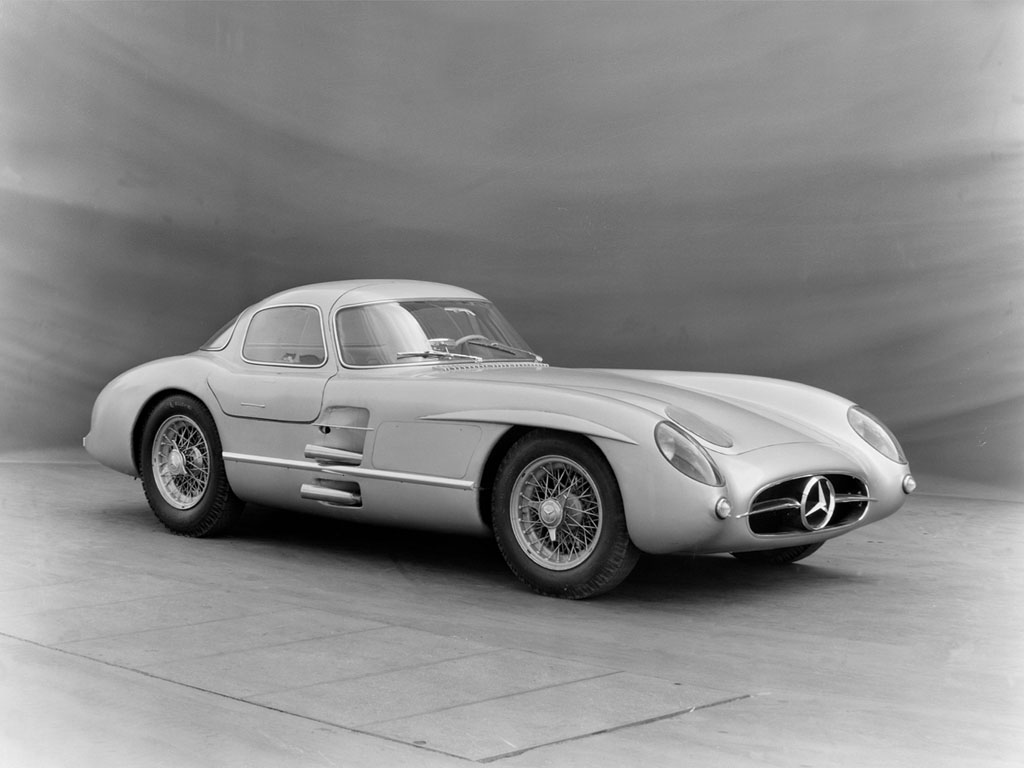
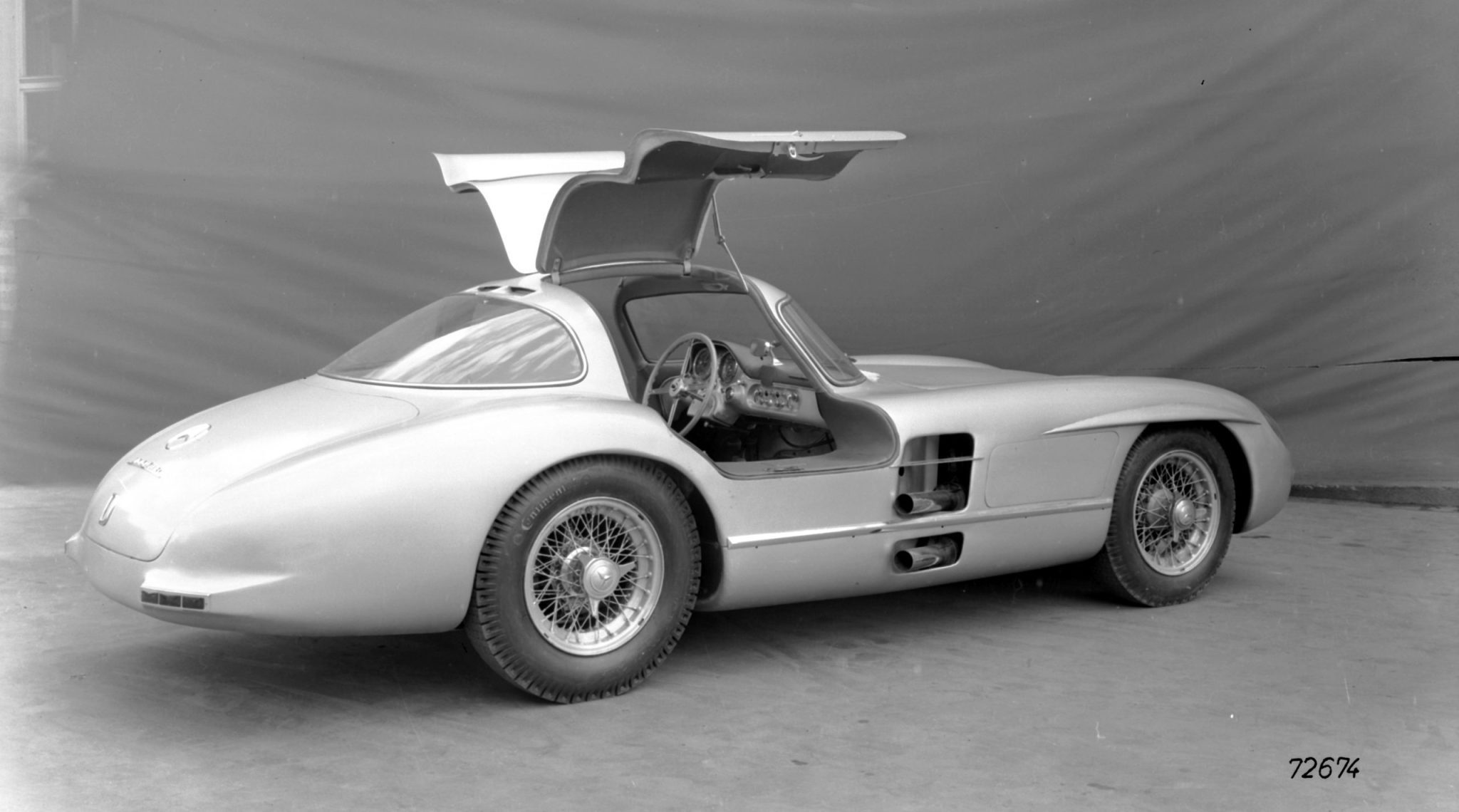
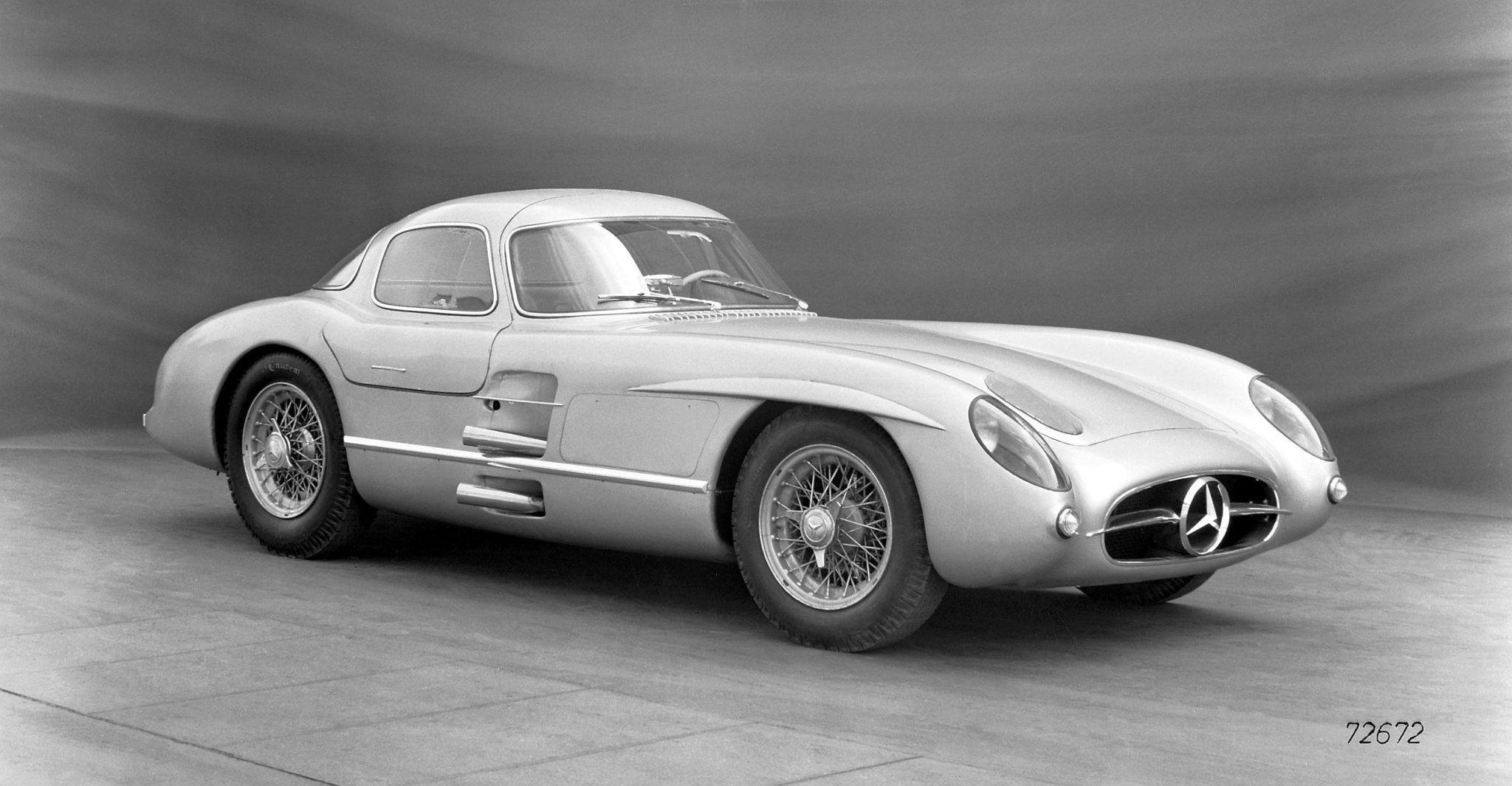
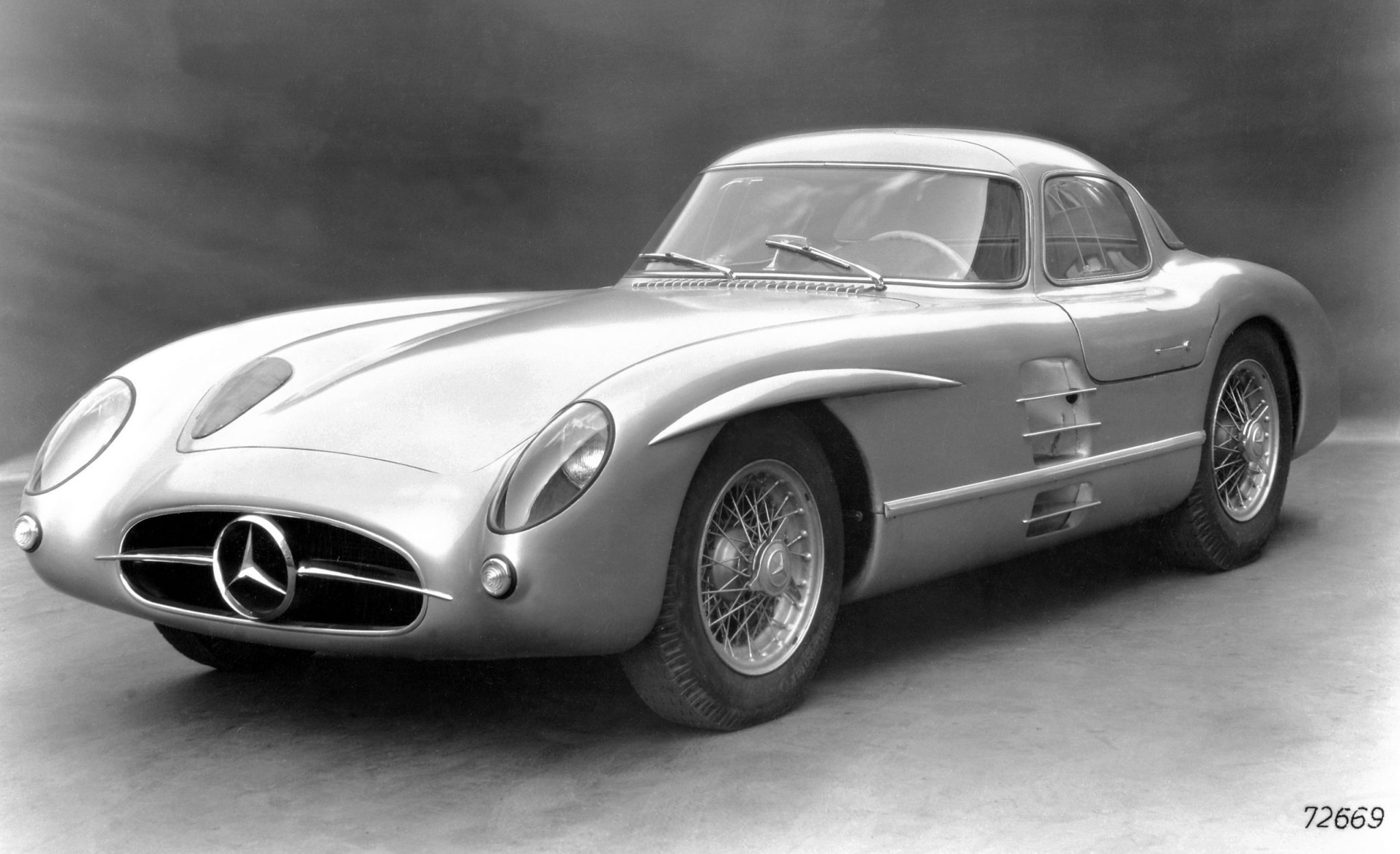
- 1. Historical Context and Significance of Reference Chassis 00007/55
- 2. Amalgam Model Engineering — M196S Caliber Replication
- 3. Finishing and Curatorial Textiles — Museum Standards
- 4. Technical Differentiation: Patrimonial Tangible Substrate vs. Conventional Industrial Diecast
- 5. Valuation Precedents — Amalgam Collection Secondary Market (Factual Data)
- APPENDIX: DETAILED CONSERVATION PROTOCOL (MUSEUM STANDARDS)
AMALGAM COLLECTION MERCEDES-BENZ 300 SLR UHLENHAUT COUPÉ (1:8)
Asset Identifier: MB-W196SS-18-AM
Status: Patrimonial Certification Dossier
Chassis Replicated: 00007/55 (“The Blue”)
Limited Edition: 199 units worldwide
SECTION A: CONFORMITY ASSET REGISTER
1. Provenance and Chain of Custody Traceability
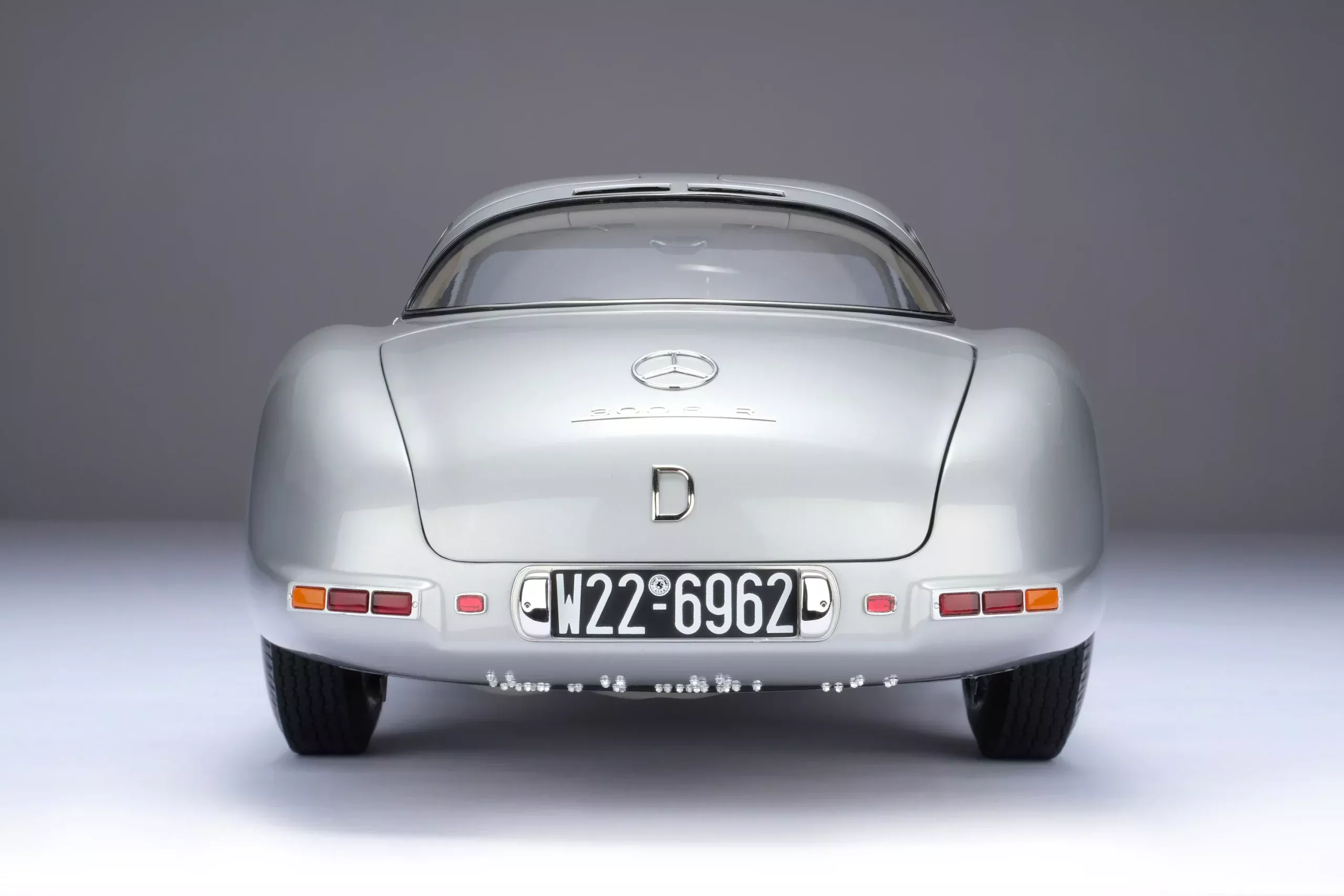
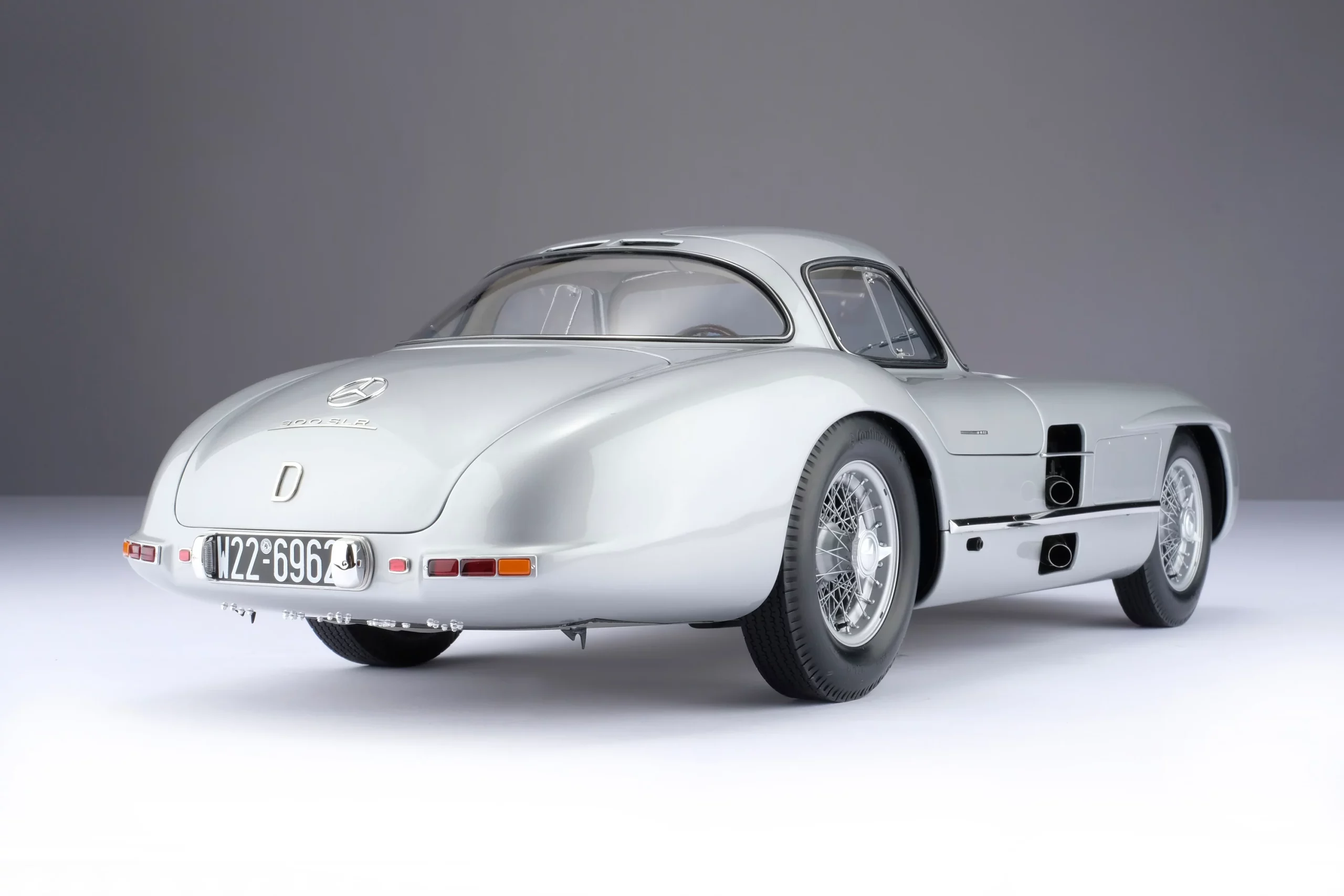
Manufacturing Source: Amalgam Collection Ltd, Bristol, United Kingdom (established 1985). Certified production facilities: Bristol (UK), Dongguan (China), Pécs (Hungary).
Official Licensing: Produced under contractual license from Mercedes-Benz Group AG (Stuttgart, Germany). Each unit is accompanied by a numbered certificate of authenticity issued by Amalgam Collection, validating compliance with technical specifications approved by Mercedes-Benz Classic.
Reference Chassis: Dimensional replica of original chassis 00007/55, designated “The Blue”, currently conserved at Mercedes-Benz Museum (Stuttgart, Germany). Twin chassis 00008/55 (“The Red”) was sold on 5 May 2022 by RM Sotheby’s at Mercedes-Benz Museum Stuttgart for €135,000,000, establishing the world record for the most expensive automobile ever sold at auction.
Capture Methodology: Geometric reconstruction based on three-dimensional scanning (3D scanning) performed directly on chassis 00007/55 with formal authorization from Mercedes-Benz Classic. Documented access to manufacturer technical archives, original engineering plans and finish specifications validated by Mercedes-Benz AG design and engineering teams.
Unit Numbering: Each specimen bears a serial number engraved on metal plate affixed to display base (format: X/199). Chain of custody traceability begins at initial delivery by Amalgam Collection and can be documented via original certificate of authenticity and acquisition invoice.
2. Geometric Integrity and Dimensional Fidelity
Reproduction Scale: 1:8 (each model dimension represents exactly 1/8th of actual dimension of chassis 00007/55).
Documented Final Dimensions: Length > 550 mm (original chassis: 4,400 mm at 1:1 scale), width approximately 210 mm, height approximately 160 mm under display case.
Dimensional Variance: Artisanal development process targets optimal geometric fidelity relative to manufacturer source data. Dimensional tolerance is not contractually guaranteed by manufacturer beyond visual conformity at declared scale. Variations inherent to manual artisanal manufacturing process are considered acceptable within prestige scale model industry standards.
Internal Architecture: Functional representation of desmodromic valve distribution system (without valve springs) of M196S engine, major technical characteristic of 1955 Mercedes-Benz engineering. Lateral inclination of straight-eight engine block maintained at 53° conforming to original specifications.
3. Materials Specifications and Temporal Stability
Structural Composites: Use of thermosetting resins with high elastic modulus, selected for resistance to thermal creep over decennial cycles. Composites are formulated to minimize dimensional shrinkage and deformation under prolonged static load in storage conditions conforming to manufacturer recommendations.
Metallic Elements: Employment of stainless steel (conforming to Grade 304 AISI or technical equivalent) and machined aluminum alloys for structural components, reproduced exhaust systems and mechanical details. These materials offer documented protection against environmental oxidation in controlled conservation conditions conforming to museum standards.
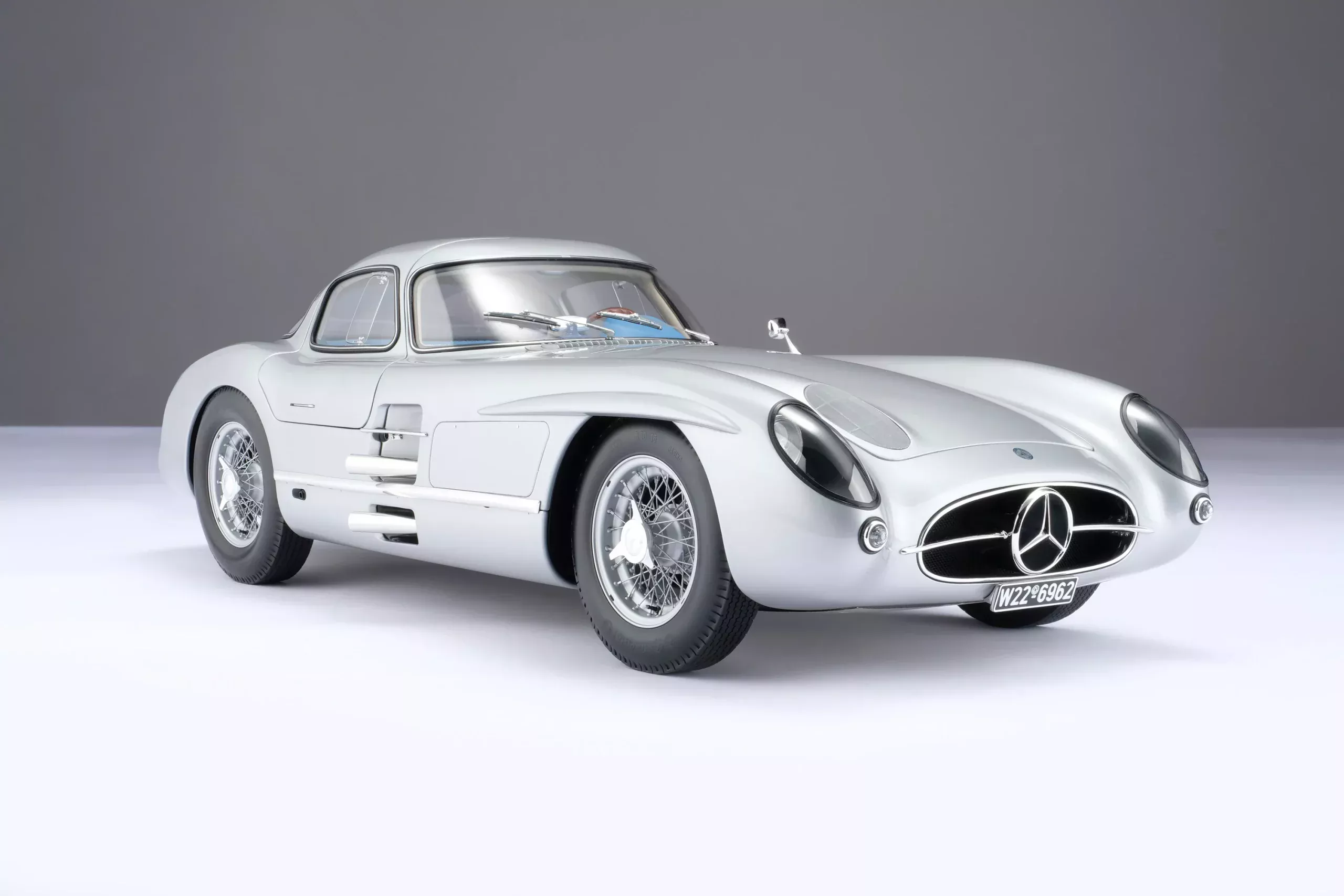
Paint Finish: Application of archival-quality two-component automotive paint, applied according to particulate control protocols aimed at guaranteeing absence of atmospheric inclusions. Finish is documented as “Silver Grey Metallic” (ref. chassis 00007/55) or “Jaguar Cream” (available by special order), replicating period color schemes validated by Mercedes-Benz Classic.
Interior Textiles: Use of Gabardine textile with Tartan pattern (blue for chassis 00007/55 replica, red for chassis 00008/55 variant), with weaving calibrated to respect visual resolution at 1:8 scale. Fibers are selected for chromatic stability and resistance to UV photodegradation under controlled exposure conditions.
Elastomeric Elements: Tires reproduced in synthetic elastomer. Under permanent static load, these materials are susceptible to deformation by creep. Use of load-relief base supplied by manufacturer is imperative for long-term conservation.
4. Manufacturing Complexity and Artisanal Process
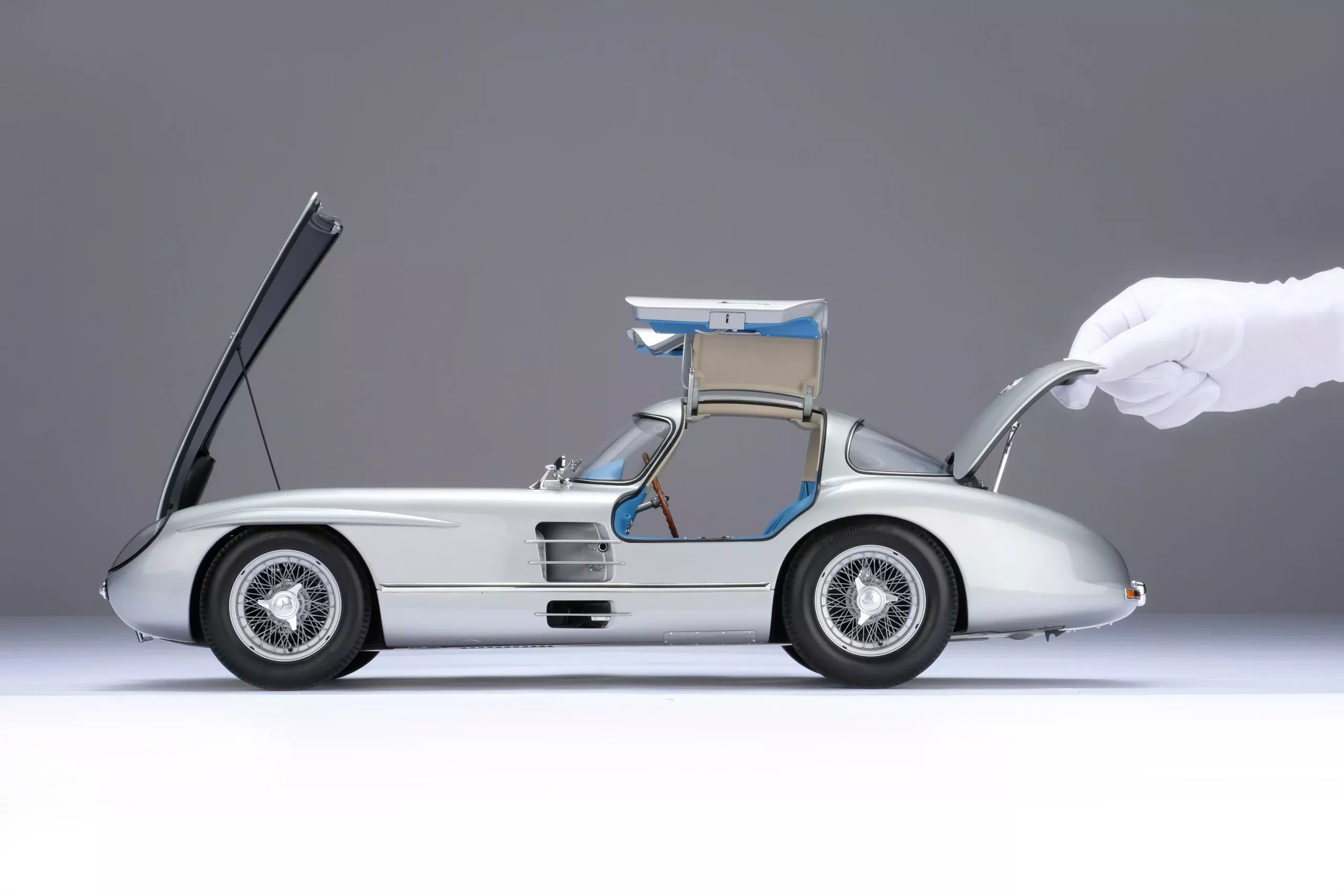
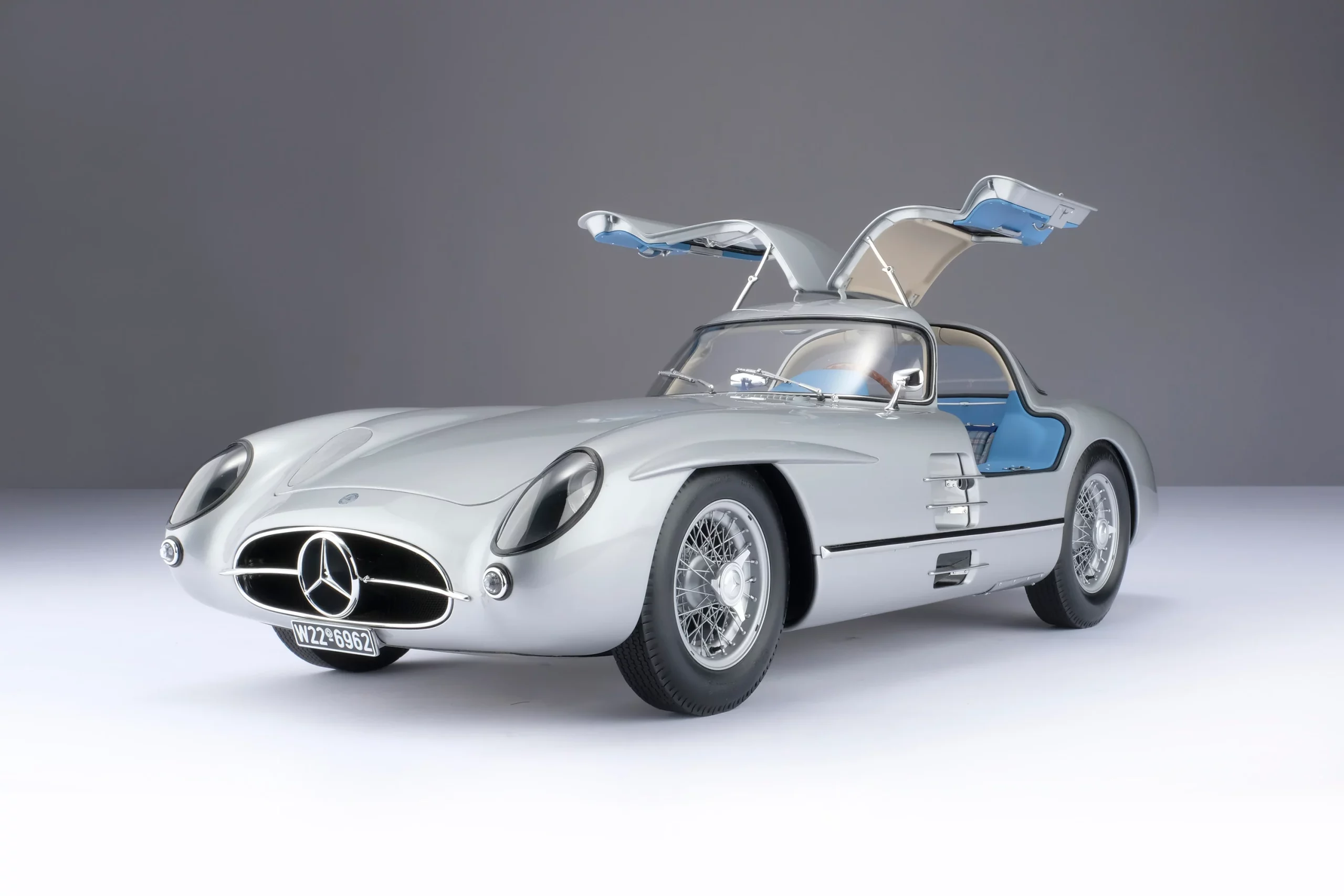
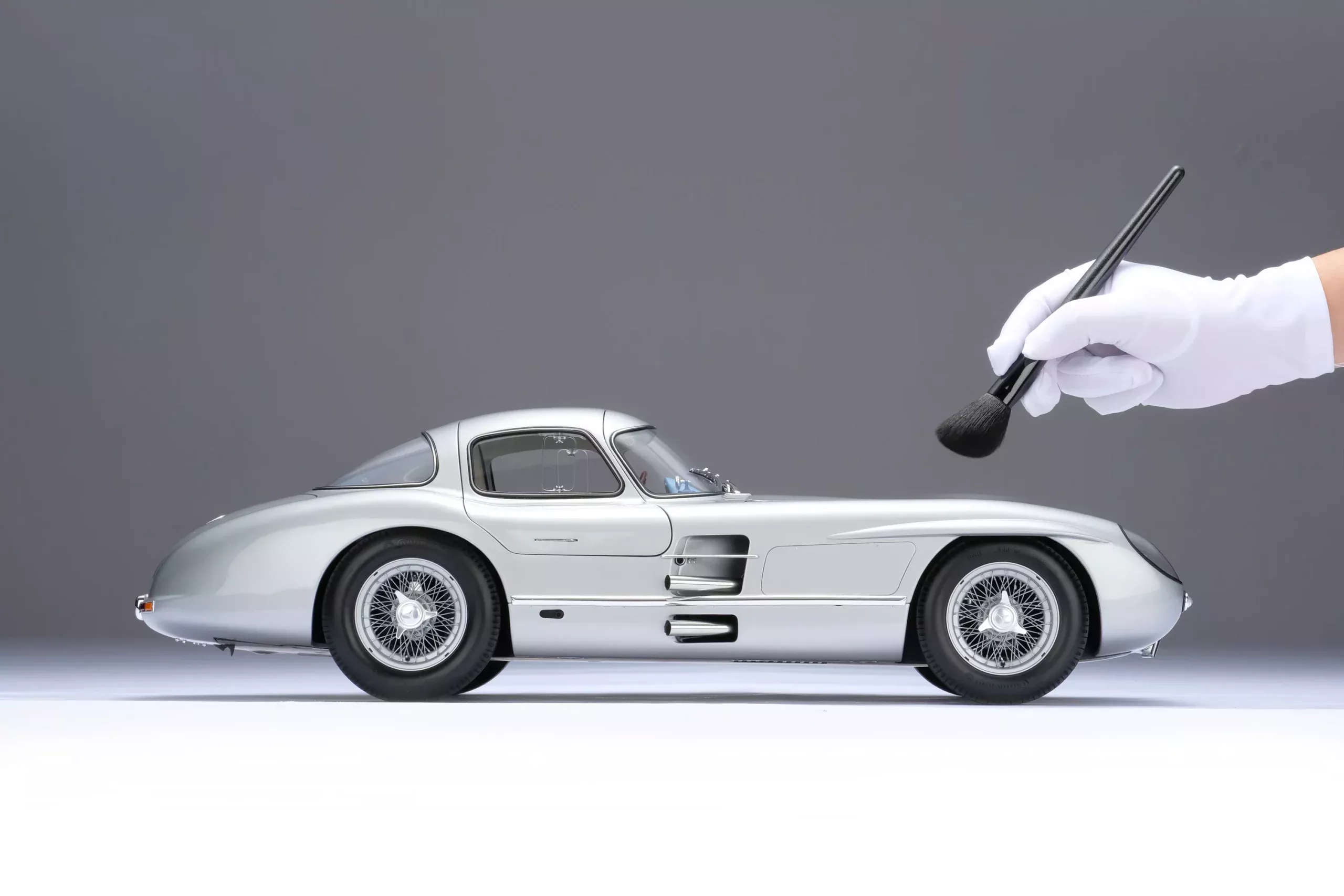
Development Duration: 4,000+ hours of technical development documented by Amalgam Collection to establish master model, including geometric validation phase with Mercedes-Benz Classic.
Unit Assembly Duration: 400+ hours of manual assembly per specialized technician, per unit produced. This artisanal process excludes any automation of finishing or final assembly.
Component Count: Assembly consisting of several thousand individual pieces. Manufacturer does not communicate precise contractual figure, this data being considered proprietary information of manufacturing process.
Production Method: Artisanal manufacture in Amalgam Collection workshops (Bristol, UK for coordination and critical finishing; Dongguan, China for casting and intermediate assemblies; Pécs, Hungary for Ferrari/Porsche finishing and final assemblies). Each unit is manually assembled by restricted team of specialized artisans.
5. Patrimonial Valuation Logic and Documented Market Precedents
Contractual Rarity: Edition strictly limited to 199 worldwide units. Programmed cessation of tooling after complete production, creating permanent structural entry barrier. No additional production is planned or authorized by Mercedes-Benz license.
Public Auction Precedents — Amalgam Collection Models (1:8 Scale, Limited Editions):
- Bentley Speed 8 Le Mans 2003 (limited edition 27 specimens): €19,200 incl. premium (Bonhams Cars, Villa La Vigie, Monaco, 14 May 2024, Lot 17).
- McLaren-Mercedes MP4-22 Japanese GP 2007 (specimen #1/limited series, signed Lewis Hamilton): £3,562.50 incl. premium (Bonhams Cars, Goodwood Festival of Speed, 5 July 2019, Lot 180).
- Ferrari 250 GTO 1962 chassis 3987GT (specimen 99/99, Ralph Lauren collection): sold via RM Sotheby’s Open Roads (March 2021, Lot N025) — transaction price not publicly communicated.
Value Indexation: Perceived value of this asset is indexed on three convergent factors:
- Absolute historical rarity of reference chassis 00007/55 (one of only two existing specimens worldwide).
- Record auction precedent of twin chassis 00008/55 sold €135,000,000 (RM Sotheby’s, 5 May 2022).
- Secondary market precedents of Amalgam 1:8 models in strict limited edition (€3,500 – €19,200 documented).
Asset presents potential directional alignment with “Blue-Chip” automotive value indices (HAGI Top Index, Knight Frank Luxury Investment Index) without guaranteed statistical correlation. Valuation derives from dynamics specific to prestige automotive collectibles market.
Patrimonial Non-Liability Clause: This object does not constitute regulated financial instrument under Swiss (FMIA) or European (MiFID II) legislation. It generates no cash flow nor guaranteed yield. Any appreciation or depreciation in value derives exclusively from secondary market dynamics of prestige collectibles, unpredictable and non-guaranteed. No minimum liquidation value is guaranteed. This asset is a non-financial tangible substrate whose future valuation depends on uncontrollable exogenous factors (collector demand, evolution of prestige automotive market, maintenance of conservation state).
6. Conservation and Preservation Protocol Conforming to Museum Standards
Required Controlled Environment:
- Temperature: 18°C – 22°C (maximum variation ±2°C over 24-hour period).
- Relative Humidity: 45% – 55% RH (maximum variation ±5% over 24-hour period).
- Atmospheric Pressure: No specific documented requirement.
Light Exposure:
- Total UV exclusion: UV-A (315-400 nm) and UV-B (280-315 nm) via certified anti-UV filters or warm white LED lighting (2700-3000K) certified without UV emission.
- Visible light limitation: < 150 lux continuous exposure (conforming to ICOM standards for textile and sensitive paint conservation).
- Exposure duration: Maximum 8 hours/day under direct lighting recommended to minimize photochemical aging of pigments and textiles.
Static Load and Structural Relief:
- Mandatory use of load-relief base supplied by manufacturer to prevent permanent elastomeric deformation of tires under prolonged gravitational load.
- Optional rotation of model 180° every 6 months if permanent static display (non-contractual conservation recommendation).
Handling and Cleaning:
- Mandatory gloves: Acid-free white cotton or powder-free nitrile, conforming to museum handling standards.
- Handling by structure only: Grasp by lower chassis or base exclusively. No handling by painted bodywork elements or fragile components (mirrors, antennas, exhausts).
- Cleaning: Dry anti-static microfiber exclusively. No solvents, no detergents, no aqueous products. Dust removal by low-pressure air blower (< 2 bar) or soft natural-bristle brush.
Transport and Insurance:
- Transport: Custom crate with anti-vibration suspension and high-density foam padding imperative. No transport without adapted protective packaging.
- Insurance: “Nail-to-Nail” coverage recommended for declared value conforming to documented market precedents or initial acquisition value, whichever is higher. Consultation with specialized fine art insurance broker recommended.
SECTION B: IN-DEPTH TECHNICAL ANALYSIS
1. Historical Context and Significance of Reference Chassis 00007/55
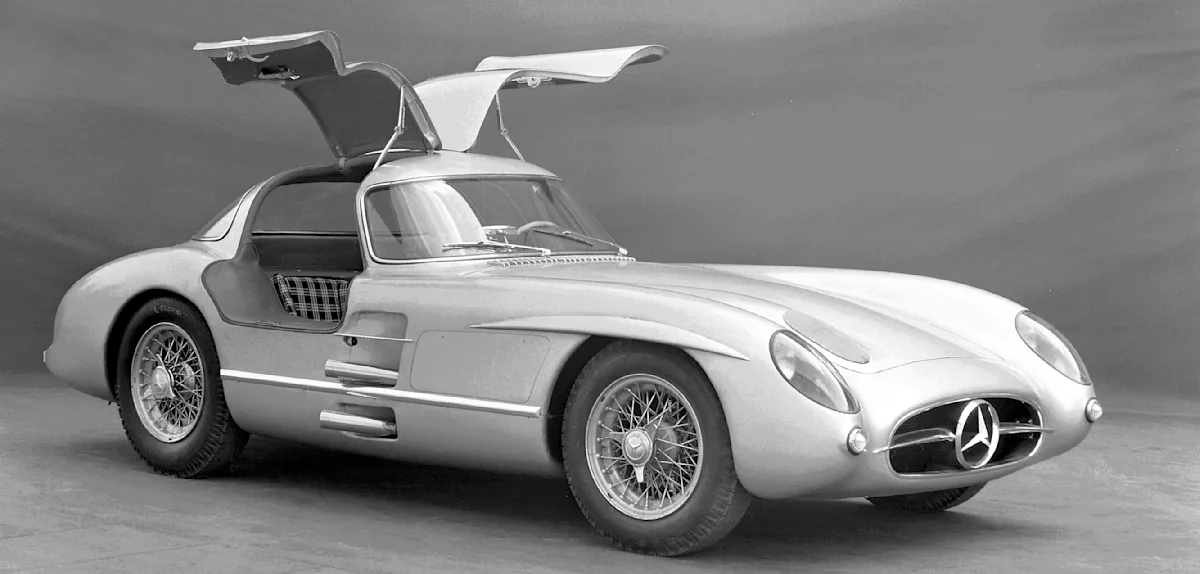
Design Engineer: Rudolf Uhlenhaut (1906-1989), Director of Mercedes-Benz AG racing department (1936-1972), chief engineer responsible for W196 Formula 1 and 300 SLR Sport-Prototype programs.
Mechanical Architecture: Direct derivation from W196R Grand Prix chassis (Formula 1 World Champion 1954-1955, driver Juan Manuel Fangio). M196S straight-eight 3.0-liter engine (2,982 cm³), bore and stroke increased from original 2.5L F1. Power developed: 302 hp (222 kW) at 7,500 rpm. 5-speed manual transmission. Curb weight: 998 kg.
Documented Performance: Maximum speed 290 km/h (180 mph) on public road, according to Mercedes-Benz technical data. Rudolf Uhlenhaut himself reportedly covered Stuttgart-Munich route (approximately 230 km) in approximately 1 hour during urgent business trips, according to period testimonies not officially certified.
Production Status: Strictly two prototypes produced (chassis 00007/55 and 00008/55). No official competition participation. Initial development planned for 1956 Carrera Panamericana (race cancelled following 1955 tragic accidents). Definitive withdrawal of Mercedes-Benz from motorsport end 1955, strategic redirection toward series vehicle development.
Documented Historical Use:
- Chassis 00007/55 (“The Blue”): Used as personal company vehicle by Rudolf Uhlenhaut from 1955 to 1963. Currently conserved at Mercedes-Benz Museum (Stuttgart, Germany), permanent exhibition.
- Chassis 00008/55 (“The Red”): Used sporadically by Mercedes-Benz racing department. Sold at auction for €135,000,000 (RM Sotheby’s, Mercedes-Benz Museum Stuttgart, 5 May 2022) to unidentified private collector. Sale proceeds allocated to “Mercedes-Benz Fund” (international scholarship program in environmental sciences and decarbonization).
1955 Technical Context: 300 SLR Uhlenhaut Coupé was fastest street-legal automobile of its era. 290 km/h speed surpassed all contemporary series vehicles (Ferrari, Maserati, Jaguar) by substantial margin. Concept of “company car” reaching 290 km/h illustrates Rudolf Uhlenhaut’s radical technical approach to performance engineering.
2. Amalgam Model Engineering — M196S Caliber Replication
Desmodromic Architecture: Faithful 1:8 scale representation of valve distribution system without valve springs, Mercedes-Benz technical innovation enabling high engine speeds (7,500+ rpm) without valve float risk. This system, derived from W196 Formula 1 experience, constituted major technological advance in 1955.
Straight-Eight Engine Configuration: Scrupulous respect for 53° lateral inclination of 8-cylinder inline engine block, critical detail for low aerodynamic silhouette of Uhlenhaut Coupé. This inclination permitted lowering hood while maintaining intake height necessary for Weber carburetor system.
Intake System: Detailed reproduction of polished aluminum intake trumpets, including filtration systems specific to GT version (different from “722” Stirling Moss Mille Miglia 1955 race version). Intake manifolds are dimensioned proportionally to 1:8 scale to maintain visual coherence.
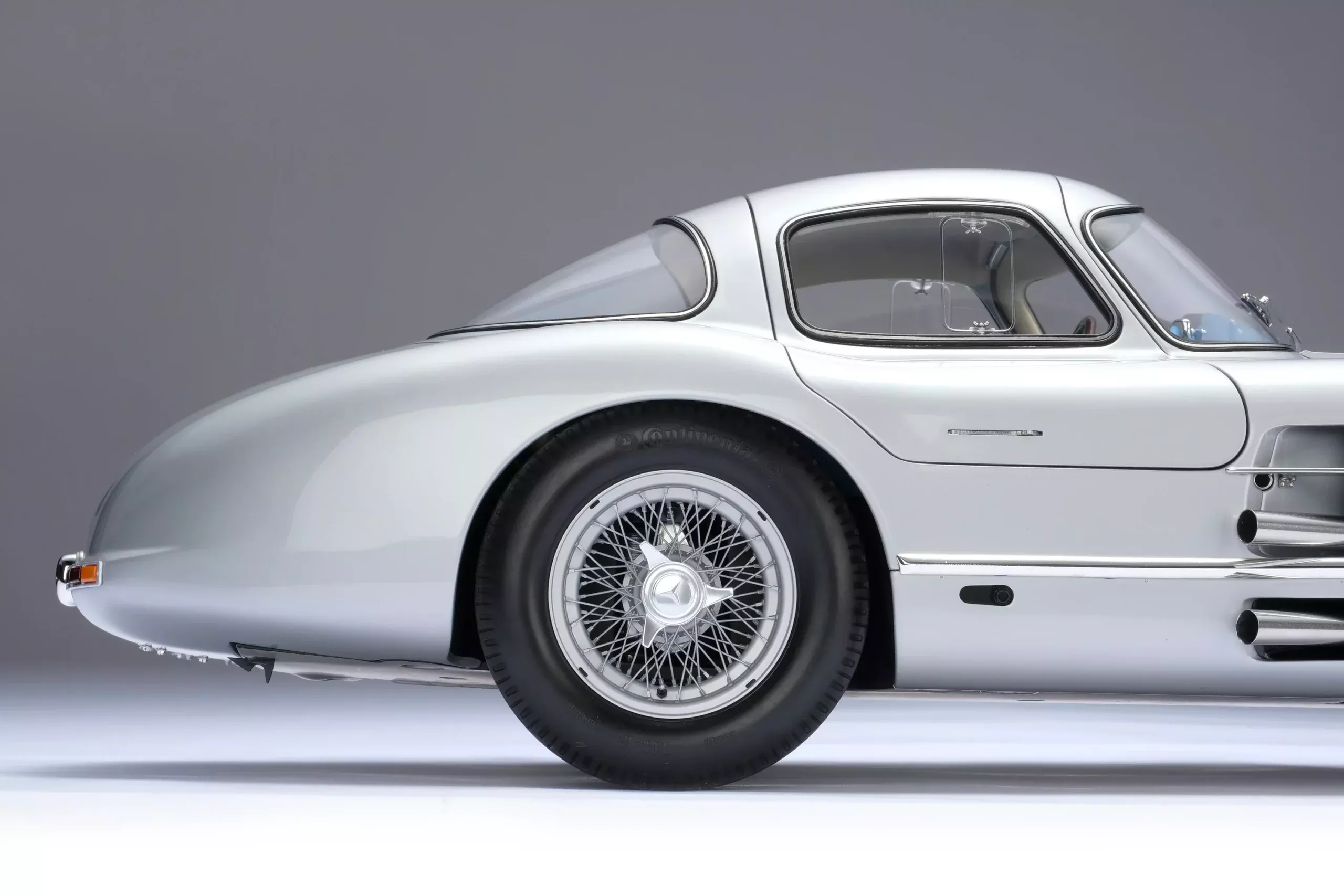
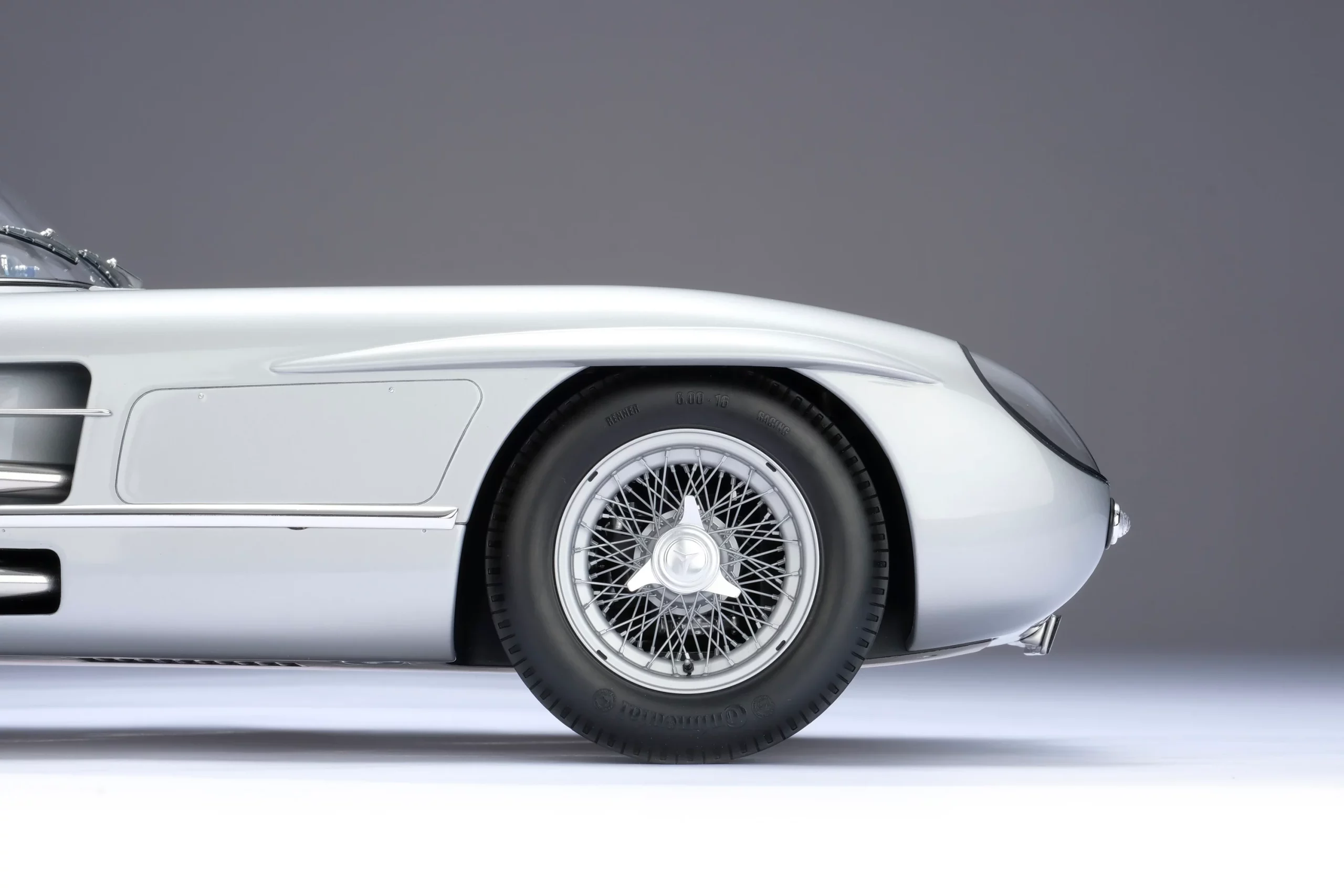
Lateral Exhaust System: Representation of characteristic exhaust manifolds exiting right side of vehicle, distinctive detail of 300 SLR (roadster and coupé) compared to series 300 SL Gullwing. Collectors and silencers are reproduced with geometric fidelity.
Braking System: Reproduction of front and rear drum brakes. Representation of Intrados aerodynamic system (rear air brake) developed by Mercedes-Benz to compensate for lesser efficiency of drum brakes versus Jaguar Type D disc brakes (Le Mans 1955 competition). This vertical pivoting system at vehicle rear constituted major aerodynamic innovation.
3. Finishing and Curatorial Textiles — Museum Standards
Interior: Gabardine textile replication with Tartan pattern according to original specifications:
- Chassis 00007/55 (“The Blue”): Blue Tartan.
- Chassis 00008/55 (“The Red”): Red Tartan (available by Amalgam special order).
Weaving is dimensioned to respect visual resolution at 1:8 scale, avoiding “over-scale” effect observed on conventional reproductions where fibers appear disproportionate. This textile detail attention requires weaving on specialized loom with millimetric calibration.
Instrumentation: High-definition dials under curved optical lenses, simulating depth and curvature of period Bosch mineral glasses. Gauge graduation (speed, engine speed, oil pressure, temperature) and index typography conforming to VDO and Bosch specifications used by Mercedes-Benz in 1955. Needles are metallic, not painted.
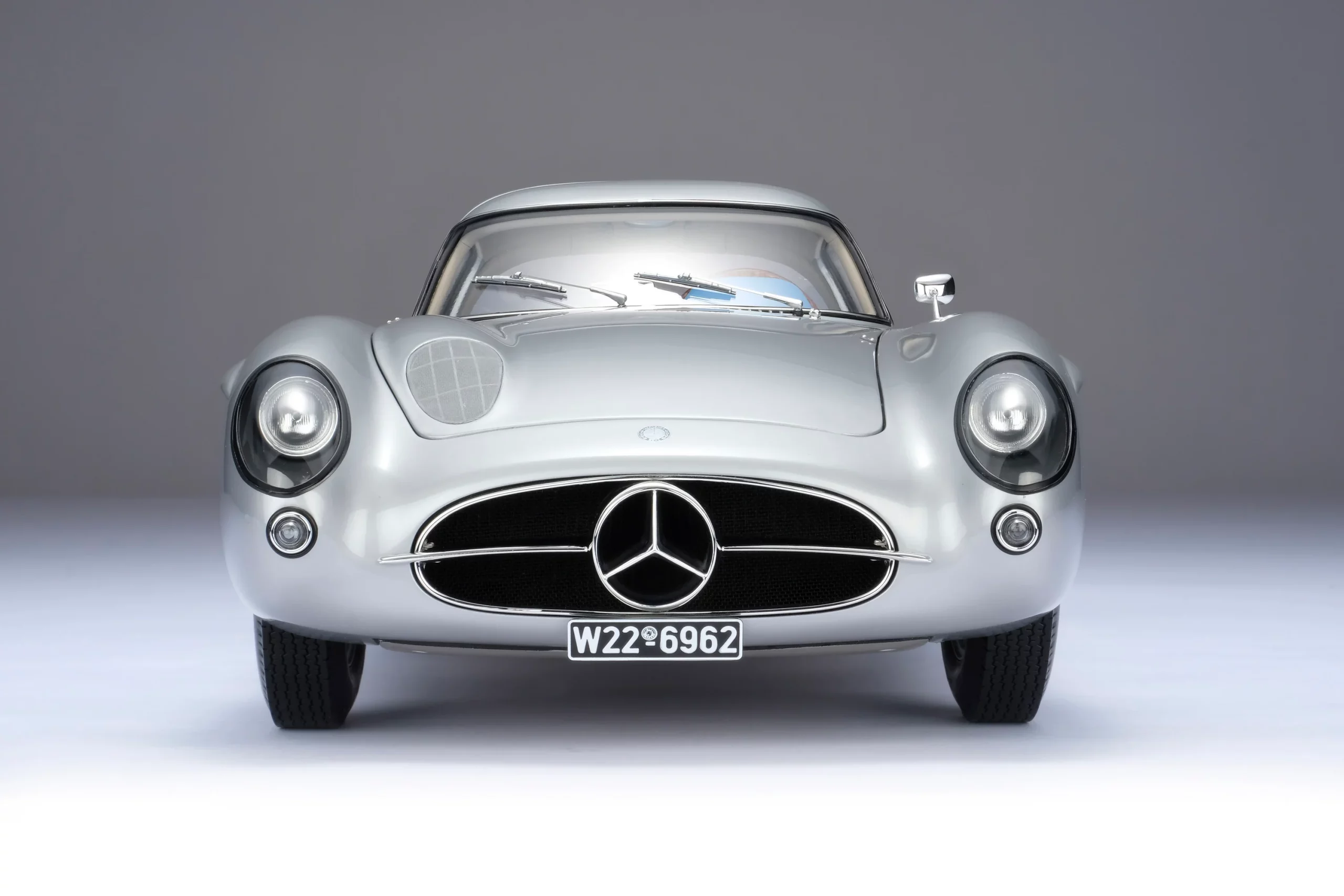
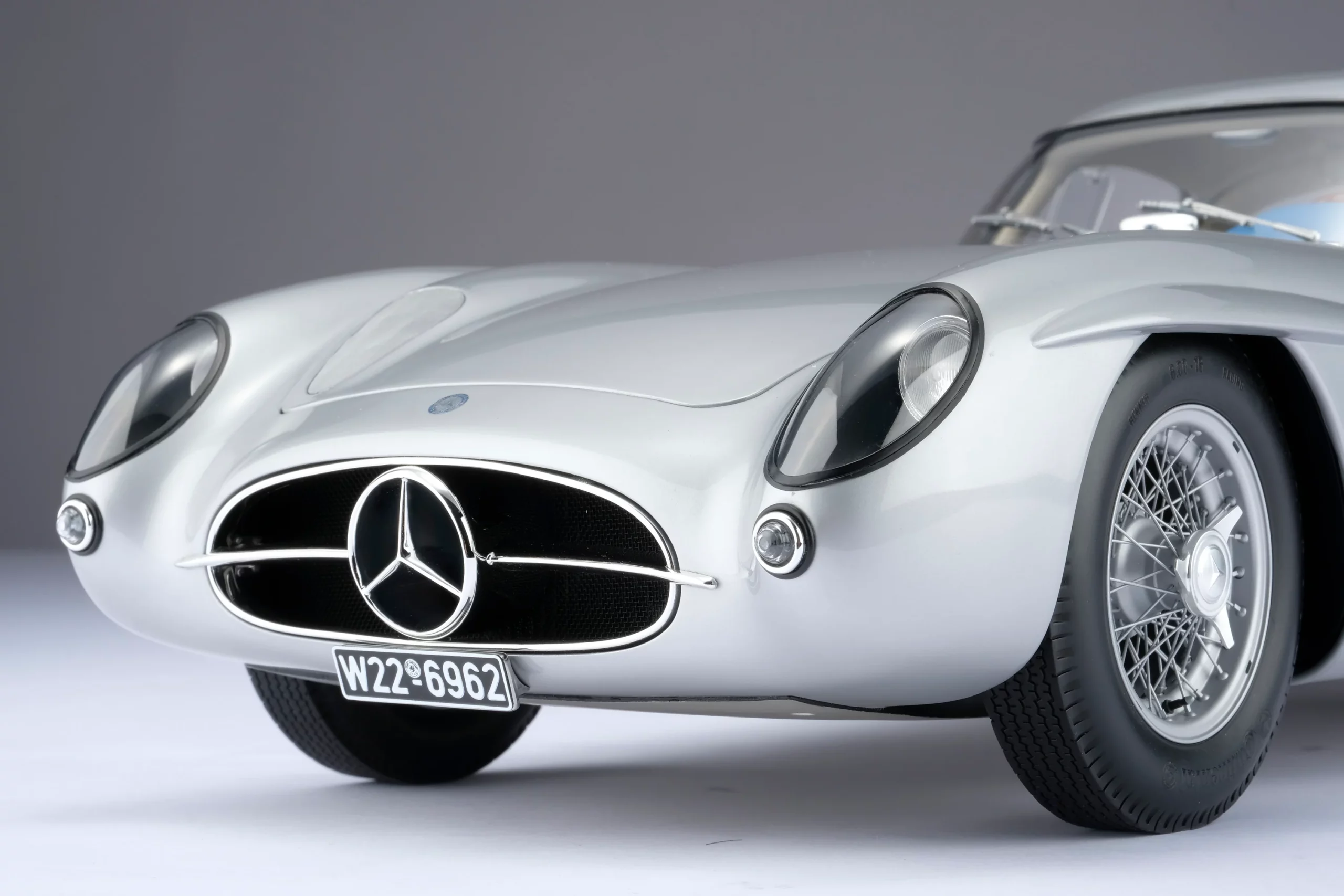
Chrome and Aluminum Elements: Reproduction of tubular bumpers, grille, headlights, and decorative elements in genuine chrome finish (copper chrome electroplating, process identical to actual automotive components at reduced scale) or polished aluminum. No metallic paint imitating chrome is used. Chrome-plated parts undergo same electroplating process as automotive components, adapted to model scale.
Wheels and Tires: Replication of Rudge-Whitworth spoke wheels in aluminum, with individual metal spokes assembled (not monobloc molded). Dunlop Racing tires reproduced in synthetic elastomer with proportioned period marking.
4. Technical Differentiation: Patrimonial Tangible Substrate vs. Conventional Industrial Diecast
This Amalgam Collection 1:8 model is not a “diecast” in conventional industrial sense. It positions as patrimonial tangible substrate, distinct category from mass productions. Here are documented structural differences:
Conventional Industrial Diecast (Bburago, Maisto, Autoart, Minichamps 1:18):
- Primary material: Zamak injection molding (zinc-aluminum-magnesium-copper alloy) in automated industrial series.
- Assembly process: Semi-automated or robotized, spray paint finish in robotized booth.
- Estimated unit production cost: €50-€200 per unit at 1:18 scale (production volumes 5,000-50,000 units/reference).
- Dimensional fidelity: ±0.5 mm to 1 mm at declared scale (standard industrial tolerances).
- Unit manufacturing duration: 2-8 hours (including paint drying).
- Component count: 50-150 pieces typically.
- Public sale price: €80-€400 depending on scale and complexity.
Amalgam Collection 1:8 (Patrimonial Tangible Substrate):
- Primary material: High-modulus thermosetting resin molding + individually CNC-machined metal elements (stainless steel, aluminum).
- Assembly process: Integral manual artisanal, two-component automotive paint finish with particulate control (ISO 8 clean room or superior).
- Estimated unit production cost: €8,000-€15,000 per unit (400 hours x €20-€35/hour specialized Europe/Asia workshop).
- Dimensional fidelity: Sub-millimetric variance on manufacturer 3D scans (artisanal tolerance, non-contractual).
- Unit manufacturing duration: 400+ hours documented by manufacturer (excluding master model development 4,000h).
- Component count: Several thousand (proprietary figure not communicated).
- Public sale price: Not publicly communicated by Amalgam (sale on demand, secondary market estimation €15,000-€25,000 new depending on model).
Complexity Ratio:
- Manufacturing duration: Amalgam 1:8 = 50x to 200x superior to conventional diecast.
- Production cost: Amalgam 1:8 = 40x to 75x superior to premium diecast (Autoart, CMC).
- Component count: Amalgam 1:8 = 10x to 20x superior to complex diecast.
Classification Conclusion: Amalgam Collection 1:8 model positions as patrimonial conservation instrument and applied art object, not as toy or mass collectible. It more closely resembles in terms of manufacturing process and economic positioning a high-complication timepiece (Patek Philippe, Vacheron Constantin) than a Bburago or Maisto diecast. This distinction is fundamental for understanding asset’s patrimonial valuation logic.
5. Valuation Precedents — Amalgam Collection Secondary Market (Factual Data)
Available public auction data demonstrate significant and documented valuation of Amalgam Collection models in strict limited edition on secondary market:
Precedent 1: Bentley Speed 8 Le Mans 2003 (Edition 27 specimens)
- Auction result: €19,200 incl. premium (hammer price + buyer’s commission).
- Auction house: Bonhams Cars, Villa La Vigie, Monaco.
- Date: 14 May 2024.
- Reference: Lot 17.
- Analysis: Reference vehicle (Bentley Speed 8 #7 Le Mans 2003 winner) estimated actual value €2,000,000-€3,000,000. Amalgam 1:8 model (27 ex.) reached €19,200, representing 0.96% of actual vehicle value (base €2M) or 0.64% (base €3M).
Precedent 2: McLaren-Mercedes MP4-22 Japanese GP 2007 Lewis Hamilton #1
- Auction result: £3,562.50 incl. premium (≈ €4,200 at 2019 rate).
- Auction house: Bonhams Cars, Goodwood Festival of Speed.
- Date: 5 July 2019.
- Reference: Lot 180.
- Particularity: Specimen #1 of limited series, signed Lewis Hamilton (F1 champion signature premium).
- Analysis: Signature effect + specimen #1 = substantial premium not representative of standard market.
Precedent 3: Ferrari 250 GTO 1962 Ralph Lauren Collection (Edition 99 specimens)
- Auction result: Not publicly communicated.
- Auction house: RM Sotheby’s Open Roads.
- Date: March 2021.
- Reference: Lot N025.
- Analysis: Reference vehicle (Ferrari 250 GTO #3987GT) estimated actual value €50,000,000-€70,000,000 (base 2018 GTO precedents). Model transaction price not disclosed, but Amalgam Ferrari 250 GTO secondary market observes valuations €8,000-€15,000 depending on condition and provenance.
Observed Ratio (Base Bentley Speed 8, verifiable public data):
Amalgam 1:8 model / Actual vehicle ≈ 0.64% to 0.96% (depending on reference vehicle valuation).
Non-Normative Application to Mercedes 300 SLR Uhlenhaut Case:
- Actual vehicle 00008/55: €135,000,000 (documented RM Sotheby’s transaction, May 2022).
- Observed Bentley ratio: 0.64% – 0.96%.
- Theoretical model valuation if identical ratio applied: €135M x 0.64% = €864,000 | €135M x 0.96% = €1,296,000.
Critical Methodological Limitation Clause:
This extrapolation is purely illustrative and presents major methodological limitations:
- Reduced sample: Single Amalgam 1:8 precedent with public price (Bentley Speed 8). Insufficient for robust statistical inference.
- Different context: Bentley Speed 8 = standard Monaco sale. Mercedes 300 SLR = historically unique asset, potentially different market.
- Uncertain liquidity: No guarantee buyer would pay this amount. Ultra-premium scale model market is narrow and illiquid.
- Uncontrolled factors: Conservation state, provenance, authenticity certificate presence, collectible market trends can vary significantly.
This simulation constitutes neither forecast, nor guarantee, nor valuation recommendation. It illustrates only theoretical ratio based on single non-structurally comparable market precedent. Any patrimonial, fiscal or insurance decision based on this extrapolation engages sole responsibility of decision-maker. Pfister Autotechnik Cabinet disclaims all liability regarding use of this simulation for decisional, fiscal, estate or insurance purposes.
Recommended Valuation for Patrimonial Use:
In absence of specific public auction precedents for Mercedes 300 SLR Uhlenhaut Coupé Amalgam 1:8 model, following valuations are recommended according to use context:
- Transport/storage insurance: Documented acquisition value + 20% (limited edition rarity premium).
- Patrimonial fiscal declaration: Documented acquisition value (fiscal conservatism).
- Trust/estate: Independent expert appraisal by specialized automobilia auctioneer (Bonhams, RM Sotheby’s, Artcurial) recommended.
APPENDIX: DETAILED CONSERVATION PROTOCOL (MUSEUM STANDARDS)
A. Controlled Environment
Temperature:
- Optimal range: 18°C – 22°C.
- Maximum tolerated variation: ±2°C over 24-hour period.
- Justification: Minimization of composite and metal expansion/contraction cycles, reduction of paint and resin cracking risk.
Relative Humidity (RH):
- Optimal range: 45% – 55% RH.
- Maximum tolerated variation: ±5% over 24-hour period.
- Justification: Prevention of metal component oxidation (RH > 60%) and resin and textile embrittlement (RH < 40%). Conforms to ICOM (International Council of Museums) recommendations for composite object conservation.
Air Quality:
- Filtration: Minimum HEPA H13 filter recommendation (captures particles > 0.3 µm at 99.95%).
- Pollutants to limit: Ozone (O₃), nitrogen oxides (NOₓ), sulfur dioxide (SO₂), volatile organic compounds (VOC). Avoid storage near materials emitting organic acids (untreated wood, acid cardboard).
B. Light Exposure
Total UV Exclusion:
- UV-A (315-400 nm): Exclusion by certified anti-UV filters (UV transmission < 1%) or LED lighting certified without UV emission.
- UV-B (280-315 nm): Total exclusion (no UV-B source tolerated).
- Justification: Prevention of paint pigment photodegradation, resin yellowing, textile fiber degradation.
Visible Light Limitation:
- Maximum intensity: 150 lux continuous exposure (conforms to ISO 11799 sensitive materials conservation).
- Recommended exposure duration: Maximum 8 hours/day under direct lighting. Mandatory nighttime extinction.
- Recommended lighting type: LED warm white 2700-3000K, CRI > 90, documented without UV emission.
Natural Light Exposure:
- Not recommended: Direct or indirect sunlight contains residual UV even through glazing. If unavoidable exposure, architectural anti-UV filters (3M, Solar Gard) imperative.
C. Static Load and Structural Relief
Relief Base:
- Mandatory use: Base supplied by Amalgam Collection distributes gravitational load across entire lower chassis, avoiding stress concentration on tire contact points.
- Base material: Generally noble wood or neutral composite (without organic acid emission).
- Consequences of base absence: Permanent elastomeric tire deformation (irreversible flattening), potential suspension sagging (if functionally represented).
Preventive Rotation (Optional):
- Frequency: Every 6 months.
- Method: Model rotation 180° to alternate static load zones.
- Justification: Mechanical stress redistribution, particularly relevant if static display > 5 years without handling.
D. Handling and Cleaning
Personal Protective Equipment (PPE):
- Gloves: 100% acid-free white cotton (museum conservation standard) or powder-free nitrile (blue or black, avoid allergenic latex).
- Justification: Prevention of cutaneous fatty acid, salt, moisture deposit on painted and metallic surfaces. Fingerprints contain chlorides corrosive to metals.
Handling Technique:
- Structure-only grasp: Lower chassis, longerons, or base. Never by bodywork elements, hood, doors, mirrors, antennas, exhausts (rupture or deformation risk).
- Two-handed handling: Stable grip, avoid any abrupt movement or torsion.
- Handling area: Stable flat surface, foam or felt padding, away from table edges (fall risk).
Cleaning:
- Preferred method: Dry anti-static microfiber (eyewear or optical screen type). Delicate pass without excessive pressure.
- Dust removal: Low-pressure air blower (< 2 bar, filtered dry air) or soft natural-bristle brush (sable, squirrel).
- Prohibited products: Any solvent (alcohol, acetone, white spirit), any detergent (soap, dish liquid), any aqueous product (tap water, demineralized), any aerosol (chemical residue deposit risk).
- Frequency: Quarterly light cleaning in controlled environment. If public display (dust), monthly.
E. Transport and Insurance
Transport Packaging:
- Mandatory custom crate: Plywood or high-density triple-flute cardboard, interior dimensions adapted with 50-100 mm margin.
- Internal suspension: High-density polyurethane foam (30-40 kg/m³) or custom-cut cellular foam. Vibration isolation on 6 faces.
- Fixation: Velcro straps or soft compressive padding foam (avoid paint friction). No direct packaging/model contact without intermediate textile protection.
- Labeling: “FRAGILE – Art Object – Vertical Handling Only – Controlled Temperature Required”.
Professional Transport:
- Recommended specialized transporter: Fine art shippers (Crozier, Hasenkamp, Mtec, Crown Fine Art) accustomed to high-value art objects and collectibles.
- Climate-controlled vehicle: Temperature controlled 18-22°C during transport.
- Transit insurance: “Nail-to-Nail” coverage (from departure to arrival) for conforming declared value.
Patrimonial Insurance:
- Coverage type: “All Risks Fine Art” or “Fine Art Insurance”.
- Recommended declared value: Documented acquisition value (original invoice) + documented rarity premium by appraisal if available, or new replacement value if model exhausted (closed edition 199 ex.).
- Specialized brokers (Switzerland): Hiscox Switzerland, AXA Art Insurance, Allianz Fine Art, XL Catlin Art & Specie.
- Required documentation: Amalgam certificate of authenticity, acquisition invoice, high-resolution photographs (minimum 6 faces), independent appraisal if available.
Last Revision: January 2026
